
Learn how to plan weather-based outfits for hot, cold, rainy and changing days while staying comfortable, practical and stylish.
Introduction
Choosing what to wear becomes much easier when you understand the weather. A beautiful outfit may look perfect indoors, but it can quickly become uncomfortable if the temperature rises, rain begins or strong wind arrives. Weather-based outfits help you prepare for real conditions rather than choosing clothes only for appearance.
The right weather-based outfits can keep your body comfortable, protect your skin and help you move through the day with confidence. They can also save time because you are less likely to change clothes before leaving home. Whether you are dressing for work, school, travel or a casual weekend, planning weather-based outfits after checking the forecast can improve every clothing decision.
Creating practical weather-based outfits means considering temperature, rainfall, wind speed and humidity before getting dressed. Well-planned weather-based outfits also make it easier to choose suitable fabrics, footwear and layers for the day ahead. This guide explains how to build weather-based outfits for heat, cold, rain, wind and unpredictable seasonal conditions.
What Are Weather-Based Outfits?
Weather-based outfits are clothing combinations selected according to temperature, rain, wind, humidity and seasonal conditions. Instead of choosing an outfit only because it looks fashionable, you consider whether it will keep you comfortable throughout the day.
For Choosing what to wear becomes much easier when you understand the weather. A beautiful outfit may look perfect indoors, but it can quickly become uncomfortable if the temperature rises, rain begins or strong wind arrives. Weather-based outfits help you prepare for real conditions rather than choosing clothes only for appearance.
The right weather-based outfits can keep your body comfortable, protect your skin and help you move through the day with confidence. They can also save time because you are less likely to change clothes before leaving home. Whether you are dressing for work, school, travel or a casual weekend, planning weather-based outfits after checking the forecast can improve every clothing decision.
Creating practical weather-based outfits means considering temperature, rainfall, wind speed and humidity before getting dressed. Well-planned weather-based outfits also make it easier to choose suitable fabrics, footwear and layers for the day ahead. This guide explains how to build weather-based outfits for heat, cold, rain, wind and unpredictable seasonal conditions.
How to Dress for Hot and Humid Weather
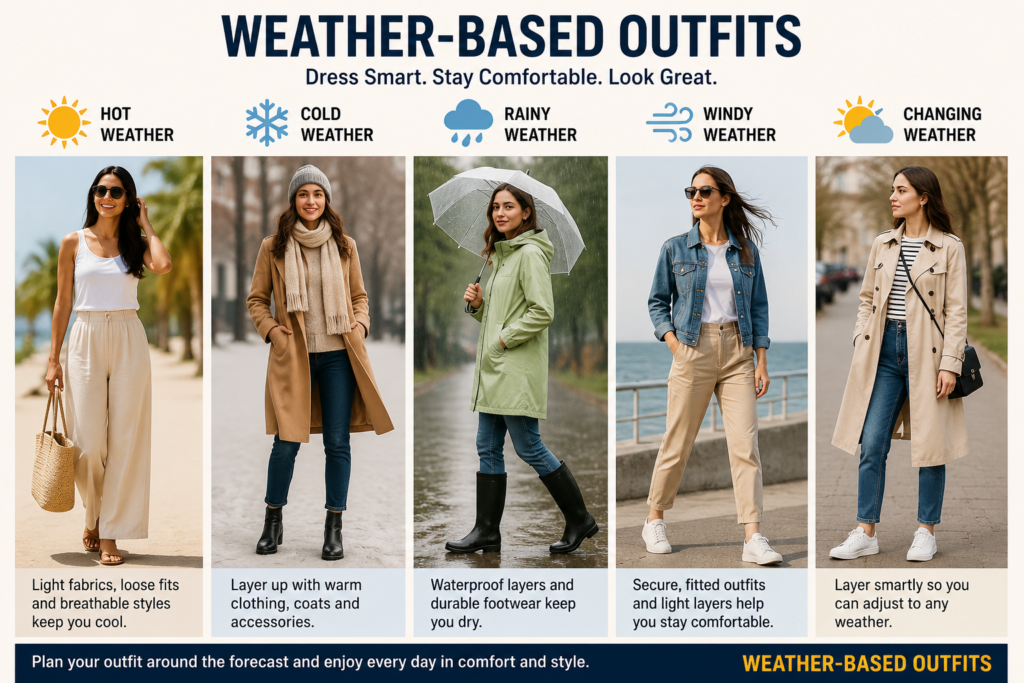
Hot weather requires breathable clothing that allows heat to escape from the body. Well-planned weather-based outfits often include loose-fitting garments because they feel cooler than tight clothes and allow air to move between the fabric and your skin.
Natural fabrics such as cotton and linen are popular choices during warm months. Cotton feels soft and absorbs moisture, while linen allows strong airflow. However, both fabrics can hold sweat in very humid weather. For active days, weather-based outfits made with lightweight moisture-wicking materials may provide better comfort.
A simple summer outfit may include a loose cotton shirt with wide-leg trousers, a breathable dress or a lightweight top with relaxed shorts. Pale colours can be useful because they absorb less visible sunlight than dark colours. However, the fabric weight, fit and construction of weather-based outfits usually matter more than colour alone.
Avoid wearing several heavy layers in high temperatures. When building modest weather-based outfits or choosing sun-protective clothing, select a loose long-sleeved shirt made from thin, tightly woven fabric. This can feel more comfortable than exposing your skin to strong sunlight for several hours.
Footwear also affects comfort. Breathable trainers, leather sandals and lightweight shoes allow heat to escape. Suitable footwear should always be part of practical weather-based outfits, while plastic shoes may trap moisture and cause discomfort, especially during long walks.
Humidity makes sweat evaporate more slowly, which can make the body feel hotter. In these conditions, avoid thick denim, heavy synthetic linings and clingy fabrics. The best weather-based outfits for humid days use quick-drying materials that do not stick to your skin.
Dressing for Work in Hot Weather
Office clothing can be difficult during summer because outdoor temperatures may be high while indoor spaces feel cold due to air conditioning. The best weather-based outfits for work use a breathable base outfit with one removable layer, allowing you to adjust easily throughout the day.
A lightweight blouse with tailored trousers can look professional without feeling too heavy. A loose midi dress may also work well when combined with a thin cardigan or an unlined blazer. These practical weather-based outfits balance workplace style with comfort in changing temperatures.
Avoid thick jackets unless your workplace requires formal business wear. Instead, choose weather-based outfits made with lightweight, breathable fabrics that still look polished and professional.
Keep a light layer at work if the building is often cold. This allows your weather-based outfits to remain comfortable indoors without forcing you to wear heavy clothing during your journey.
Protecting Yourself from Strong Sunlight
Sun protection should be part of summer outfit planning. Lightweight long sleeves, wide-brimmed hats and sunglasses can reduce direct exposure. Clothing with a close weave generally provides better protection than transparent or loosely woven fabric.
Sunscreen is still important on uncovered skin. Apply it before leaving home and follow the product instructions regarding reapplication, especially if you are sweating or spending several hours outside.
How to Build Comfortable Cold-Weather Outfits
Cold-weather clothing works best when it traps warm air close to the body. Wearing one extremely heavy garment is not always the most effective approach. Several well-chosen layers can provide warmth while allowing you to adjust your outfit during the day.
A basic cold-weather system includes a base layer, a middle layer and an outer layer. The base layer sits close to the skin and helps manage moisture. The middle layer provides insulation, while the outer layer protects you from wind and rain.
For everyday winter outfits, you could wear a long-sleeved top under a wool jumper, followed by a lined coat. Thermal leggings can be worn under trousers when temperatures are very low. Thick socks and insulated footwear also help because feet can become uncomfortable quickly in cold conditions.
Wool is useful because it provides insulation while remaining breathable. Fleece is lightweight and warm, making it practical for casual use. Down and synthetic insulated jackets offer strong warmth without the weight of some traditional coats.
Avoid relying only on cotton during very cold or wet weather. Cotton absorbs moisture and can take a long time to dry. Damp fabric may reduce comfort and make you feel colder, especially during outdoor activities.
Choosing the Right Winter Coat
A winter coat should match your climate and daily routine. A heavy insulated coat may be necessary in freezing conditions, but it can feel excessive in a mild winter.
Wool coats work well for commuting, office wear and smart occasions. Puffer jackets are often more practical for long periods outdoors because they provide insulation and are usually easier to move in.
Check whether the coat protects your neck, wrists and lower body. A longer coat can provide additional warmth, while adjustable cuffs help stop cold air from entering the sleeves.
The coat should also fit comfortably over your normal layers. A fitted coat may look neat when worn over a thin shirt, but it could feel restrictive over a jumper.
Cold-Weather Accessories That Make a Difference
Small accessories can greatly improve warmth. A hat reduces exposure around the head and ears, while gloves protect your hands from cold air. A scarf can close the space around the neckline of your coat.
Choose accessories according to your activities. Thin touchscreen gloves may suit a short commute, while insulated waterproof gloves are better for long outdoor periods.
Socks should fit comfortably inside your shoes. Wearing socks that are too thick can make footwear tight, reduce circulation and leave your feet feeling colder.
What to Wear on Rainy Days
Rainy-day outfits need to protect you from water without causing overheating. A waterproof outer layer is usually more useful than carrying a heavy coat that absorbs rain.
Look for jackets with sealed or taped seams, secure fastenings and a properly shaped hood. A fabric may be described as water-resistant without being fully waterproof. Water-resistant clothing can manage light showers, but it may not protect you during continuous rain.
A practical rainy-day outfit may include straight-leg trousers, a breathable top, a lightweight knit and a waterproof jacket. Avoid trousers that drag on the ground because they can absorb water and remain wet for hours.
Dresses and skirts can also work during rainy weather when combined with weather-resistant footwear and a suitable coat. The main goal is to keep hems away from puddles and choose fabrics that will not become heavy when damp.
Best Shoes for Wet Conditions
Footwear is one of the most important parts of a rainy-day outfit. Shoes with rubber soles and good grip can reduce the risk of slipping. Waterproof boots, treated leather shoes and weather-resistant trainers are practical options.
Avoid suede unless it has been protected and the rain is expected to remain light. Suede can stain easily and may lose its texture when soaked.
The shape of the shoe also matters. Low-cut footwear may allow water to enter during heavy rain, while boots can provide more coverage. However, non-breathable boots may feel hot if the temperature is mild.
Allow wet shoes to dry naturally. Strong direct heat can damage some materials, especially leather. Remove insoles where possible and place the shoes in a ventilated area.
Staying Comfortable Without Overheating
A waterproof coat can trap heat and moisture inside, particularly when you are walking quickly. Choose a jacket with breathable fabric, ventilation panels or underarm openings when possible.
Wear a lighter outfit underneath rather than adding several thick layers. It is often better to feel slightly cool when leaving home than to become overheated after ten minutes of walking.
An umbrella can reduce the need for a very heavy waterproof coat, but it may be difficult to use in strong winds or crowded streets.
How to Dress for Windy Weather
Wind can change how the temperature feels. A mild day may feel much colder when strong air moves across the skin. This is why the forecast’s “feels like” temperature can be more useful than the main temperature.
A wind-resistant jacket provides better protection than a thick jumper alone. Knitted fabrics allow air to pass through small gaps, while tightly woven outerwear blocks more wind.
Choose secure clothing that will not constantly move out of place. Wrap dresses, wide scarves and very loose skirts may be difficult to manage during strong gusts. A more fitted outer layer can keep the rest of your outfit under control.
Avoid unstable hats unless they can be secured. A hood, knitted beanie or close-fitting cap is often more practical than a wide-brimmed hat in windy conditions.
For cycling or walking, consider eye protection. Sunglasses or clear glasses can help protect your eyes from dust and small particles carried by the wind.
Footwear with a stable sole is important because sudden gusts can affect balance. Avoid shoes that already feel difficult to walk in, especially when the ground is wet.
Layering Outfits for Unpredictable Weather
Changing weather is one of the biggest clothing challenges. The morning may feel cold, the afternoon may become warm and rain may arrive in the evening. Layering allows you to respond without carrying a completely different outfit.
Start with a comfortable base that can be worn alone. This might be a short-sleeved shirt, a lightweight blouse or a simple dress. Add a middle layer such as a cardigan, overshirt or thin jumper. Finish with an outer layer that protects against wind or rain.
Each layer should work with the others. A bulky jumper under a fitted jacket may restrict movement. A long shirt under a short coat may also create an awkward shape. Try the complete outfit before leaving home.
Light layers are often more useful than one thick layer during spring and autumn. They can be removed, folded and carried easily.
Understanding the Three-Layer Method
The base layer should help manage moisture and feel comfortable against your skin. For everyday use, this may simply be a breathable T-shirt or long-sleeved top.
The middle layer provides warmth. Cardigans, fleece jackets, thin jumpers and lightweight quilted vests can all serve this purpose.
The outer layer protects against weather. Depending on the forecast, it could be a raincoat, trench coat, windbreaker or insulated jacket.
You may not need all three layers every day. The method is flexible and should be adjusted according to the season, activity and temperature.
Transitioning from Morning to Evening
Temperature changes are common during long days. A person leaving home early may need a jacket, while the same jacket may feel unnecessary by lunchtime.
Choose a layer that is easy to carry. A lightweight jacket can be tied around the waist or folded into a bag. A heavy wool coat may become inconvenient if the afternoon becomes warm.
Evenings can cool quickly after sunset, especially in open areas. Keep one layer available rather than leaving every warm item at home.
Choosing Fabrics for Different Weather Conditions
Fabric affects warmth, airflow, moisture control and drying time. Understanding basic fabric properties can help you make better outfit decisions.
Cotton is soft and breathable, making it suitable for casual warm-weather clothing. However, it absorbs moisture and can remain damp. Linen feels cool and airy but creases easily. Linen blends often provide a neater appearance while keeping some breathability.
Wool provides natural insulation and can help regulate body temperature. It works well for jumpers, coats, trousers and winter accessories. Merino wool is softer and lighter than many traditional wool fabrics, making it useful for base layers.
Polyester and nylon are common in sportswear and outerwear. They can dry quickly and resist water better than many natural fibres. Their performance depends on how the fabric is made, so not every synthetic garment will feel cool or breathable.
Fleece provides warmth without much weight, although it does not usually block wind. It works best under a wind-resistant outer layer.
Denim is durable but can feel heavy in hot weather and dries slowly after rain. Lightweight denim may work in mild conditions, while thick jeans are often more comfortable in cooler seasons.
Always check the full fabric composition and care label. A garment described as a wool coat may contain only a small amount of wool, while a cotton shirt may include synthetic fibres that change how it feels.
Planning Outfits Using a Weather Forecast
A weather app can provide useful information, but you need to read more than the large temperature number. Check the hourly forecast to understand how conditions may change while you are away from home.
Pay attention to the minimum and maximum temperatures, the chance of rain, expected wind speed, humidity and the “feels like” temperature. Also consider whether you will be in direct sunlight, shade or air-conditioned spaces.
Suppose the morning temperature is 11°C and the afternoon reaches 20°C. A heavy winter outfit may be comfortable during the morning but far too warm later. A breathable shirt, light jumper and removable jacket would provide more flexibility.
If there is a 40 per cent chance of rain, consider when and where the rain is expected. A short shower during the evening may require only a compact umbrella. Continuous rain throughout the day may justify waterproof footwear and a proper raincoat.
Weather forecasts are not perfect, so prepare for reasonable changes. You do not need to carry clothes for every possible condition. Focus on the risks most likely to affect your comfort.
Weather-Based Outfits for Travel
Travel outfits need to work across different environments. You may move from a cold airport to a warm destination, sit for several hours and carry luggage through changing weather.
Comfortable layers are usually the best option. A soft top, relaxed trousers, light knit and packable jacket can handle many travel conditions. Avoid complicated outfits that are difficult to adjust in small spaces.
Check the weather at your destination rather than relying on seasonal expectations. Some places experience sudden rain, strong coastal winds or large temperature differences between day and night.
Pack clothing that can be combined in several ways. A neutral jacket that works with multiple outfits is more useful than a coat that matches only one look. Shoes should suit both the forecast and your planned activities.
Do not forget indoor conditions. Hotels, airports, restaurants and public transport may use strong heating or air conditioning. Keeping one light layer in your hand luggage can prevent discomfort.
For longer trips, choose fabrics that resist creasing and dry quickly. This can reduce the amount of clothing you need to pack and make simple washing easier.
Common Weather Dressing Mistakes
One common mistake is dressing only for the current temperature. Conditions may change significantly by the time you return home. Checking the full hourly forecast can prevent this problem.
Another mistake is assuming that thicker clothing always provides more warmth. A thick open-knit jumper may allow more cold air through than a thin insulated jacket.
People also underestimate footwear. Wet socks, slippery soles and overheating feet can make an otherwise suitable outfit uncomfortable.
Wearing non-breathable clothing during physical activity is another issue. Even in cold weather, the body produces heat while walking, cycling or carrying bags. Sweat can leave your clothing damp and make you feel colder later.
Some people also ignore indoor temperatures. A winter outfit designed for the outdoors may become uncomfortable inside a heated shopping centre or office.
The best approach is to balance protection, breathability and flexibility. Your outfit should suit the full day rather than one short moment.
Frequently Asked Questions About Weather-Based Outfits
How should I dress according to the weather?
Check the hourly temperature, rain chance, wind and humidity before choosing your clothes. Wear breathable fabrics in heat, insulating layers in cold conditions and weather-resistant outerwear when rain or wind is expected.
What should I wear in 20-degree weather?
At around 20°C, many people feel comfortable in a lightweight shirt, blouse or dress. Carry a thin cardigan or jacket if the morning, evening or indoor environment may feel cooler.
What should I wear when the weather keeps changing?
Use removable layers. Start with a breathable base outfit, add a light jumper or cardigan and carry a windproof or water-resistant jacket.
Which fabric is best for hot weather?
Lightweight cotton, linen and breathable moisture-wicking fabrics work well in warm conditions. Choose loose garments that allow airflow and avoid thick, clingy materials.
How can I look stylish in rainy weather?
Choose a well-fitting waterproof coat, practical boots and clothing with shorter hems. Coordinating your raincoat, shoes and bag can create a polished outfit without reducing protection.
Are jeans suitable for hot weather?
Lightweight or loose-fitting jeans may be comfortable in mild warmth, but thick denim can trap heat. Linen trousers, cotton trousers or relaxed shorts often feel cooler during very hot weather.
How many layers should I wear in cold weather?
The number depends on the temperature and your activity level. A base layer, insulating middle layer and protective outer layer provide a useful starting point for cold conditions.
What should I wear on a windy day?
Wear a wind-resistant jacket, secure clothing and stable footwear. Avoid loose accessories that may blow away or require constant adjustment.
How do I choose an outfit when rain is uncertain?
Carry a compact umbrella or lightweight rain jacket. Choose shoes that can manage damp ground and avoid long hems that may absorb water.
Why does the weather feel colder than the forecast says?
Wind, humidity, shade and wet conditions can affect how temperature feels on the body. Check the forecast’s “feels like” temperature when planning your outfit.
Conclusion
Weather-based outfits make everyday dressing more practical. By checking temperature, wind, rain and humidity, you can choose clothes that support your comfort instead of working against the conditions.
The most effective wardrobe does not need to be large. Breathable basics, flexible layers, a reliable coat and suitable footwear can prepare you for many types of weather. Fabric choice and fit also matter because they affect airflow, warmth and movement.
Start checking the hourly forecast before getting dressed and think about where you will go, how active you will be and how long you will stay outside. Build your outfit around the conditions, then add your preferred colours, accessories and personal style. With a little planning, you can feel prepared, comfortable and confident in almost any forecast.nges and stay comfortable throughout the day.