
Discover how to choose flattering prom dresses by style, colour, fabric, fit, and budget for a confident and unforgettable night.
Introduction
Prom night is one of the most photographed and remembered events of the school year. Choosing the right prom dresses can help you feel confident, comfortable, and completely yourself. Your dress does not need to be the most expensive gown or the trendiest design online. It simply needs to fit well, suit the event, and allow you to enjoy the evening without constant adjustments.
Shopping for prom dresses can become overwhelming because there are so many shapes, fabrics, colours, and details available. This guide explains how to compare popular styles, choose the right fit, control your budget, and create a complete look that feels polished rather than forced.
How to Choose a Prom Dress That Feels Right
A good choice from the many available prom dresses should look attractive while allowing you to walk, sit, dance, and move with ease. Before focusing on colour or decoration, think about how different prom dresses may feel after several hours. A gown may look beautiful in a fitting-room mirror but become uncomfortable if the bodice feels too tight, the straps slip, or the skirt is difficult to manage.
Start by deciding how you want to feel in your chosen style. You may want classic, modern, romantic, minimal, or glamorous prom dresses. This decision can narrow your search quickly and help you avoid unsuitable options. Satin A-line prom dresses often suit those who want a timeless look, while sequinned fitted designs may work better for a dramatic entrance.
Consider the venue and dress code before buying prom dresses as well. A hotel ballroom may suit a full-length gown, while an outdoor event may call for lighter fabrics and a simpler shape. Before finalising any prom dresses, check whether your school has rules about necklines, cut-outs, sheer panels, or skirt length.
Understanding Popular Prom Dress Styles
A-Line Prom Dresses
An A-line dress is fitted around the upper body and gradually widens towards the hem. Among the most popular prom dresses, this shape gives structure without feeling restrictive. A-line prom dresses work well in satin, chiffon, tulle, and crepe, making them suitable for both simple and glamorous looks.
A-line prom dresses are also practical for dancing because the skirt usually provides enough room for movement. This style works well with flats, low heels, or taller heels. A clean A-line gown with a fitted waist creates a balanced look, while these elegant prom dresses also photograph beautifully from different angles.
Ball Gown Prom Dresses
Ball gown prom dresses create a formal and dramatic appearance with a fitted bodice and a full skirt. These elegant prom dresses are often made with tulle, organza, or structured satin. This style suits anyone who wants a traditional red-carpet moment and a memorable entrance.
Full-skirted prom dresses still need careful testing before purchase. Sit down, walk through a doorway, turn around, and practise using stairs to check the fit and movement. The dress should feel impressive without becoming difficult to manage. Lightweight ball gown prom dresses can provide the same dramatic effect while offering better comfort throughout the evening.
Mermaid and Fishtail Dresses
Mermaid prom dresses follow the body closely through the torso and hips before widening near the knee or lower leg. These fitted prom dresses create a sleek and elegant silhouette and are often made from satin, stretch crepe, or embellished mesh. Mermaid-style prom dresses are a popular choice for anyone who wants a glamorous and sophisticated appearance.
Movement is the main factor to check when trying on mermaid prom dresses. Take normal steps, sit down, and practise walking before buying. A design with stretch fabric, a back slit, or a softer flare may offer a better balance between glamour and comfort. Well-fitted mermaid prom dresses should highlight the shape without making it difficult to walk, sit, or dance.
Empire Waist Dresses
An empire waist dress has a raised waistline below the bust, with fabric flowing down from that point. This style looks soft and romantic, especially in chiffon or lightweight satin.
It can also feel comfortable in a warm venue because it does not cling closely around the waist and hips. The bodice should still feel secure, so check the support and straps carefully.
Modern Two-Piece Designs
Two-piece outfits combine a fitted top with a matching long skirt. During the fitting, raise your arms and sit down to ensure both pieces stay secure and follow the event dress code.
Choosing a Flattering Prom Dress Colour
Colour can change the mood of a dress as much as its shape. Black often feels elegant and confident. Navy offers a softer formal option. Red creates a bold statement, while burgundy adds depth. Pastels such as blush, lilac, pale blue, and mint produce a romantic look. Emerald, royal blue, and deep purple appear rich under evening lighting.
Instead of following strict rules about skin tone, test several shades in natural and indoor light. A colour may look different under shop lighting, venue lighting, and camera flash. Take an unfiltered photo during the fitting to see how the shade appears on camera.
Hair, jewellery, makeup, and accessories also affect the final look. A simple dress in a strong colour may need only small earrings and a clutch. A heavily decorated gown may work better with neutral accessories. The aim is balance, not perfect matching.
Do not reject a colour simply because it is not part of your normal wardrobe. Prom is a chance to try something new. However, you should never feel pressured to wear a shade that makes you uncomfortable. Choose the colour that makes you feel confident when you see your reflection.
Selecting the Right Fabric
Fabric affects comfort, shape, movement, and price. Satin has a smooth surface and creates a polished finish. It suits fitted gowns, A-line dresses, and simple designs. However, it can show creases and the outline of undergarments, so fit matters.
Chiffon is light and flowing. It is often used for soft skirts, sleeves, and layered gowns. It feels comfortable for dancing but may snag on jewellery. Tulle creates volume and is common in ball gowns, although too many stiff layers can feel bulky.
Velvet has a rich look and works well for cooler evenings. Lace adds texture, while sequins and beads create sparkle. Check embellished dresses carefully because rough details may irritate the arms or catch on fabric.
Crepe is a strong option for a clean, modern gown. It drapes well without needing heavy decoration. Stretch fabric may improve comfort in fitted styles, but it should still provide enough structure. Judge the fabric while sitting and moving, not only while standing.
Getting the Correct Fit and Size
Formal dress sizing often differs from everyday clothing sizes. The number on the label is only a starting point. Use your current measurements and compare them with the brand’s size chart. Measure the fullest part of your bust, natural waist, and widest part of your hips while wearing light clothing or your planned undergarments.
When your measurements fall between sizes, it is usually safer to choose the size that fits the largest measurement and alter the other areas. A seamstress can often take in extra fabric more easily than create space in a dress that is too small.
The bodice should feel secure without affecting your breathing. Straps should stay in place without digging into your shoulders. The zip should close smoothly, and the skirt should allow normal steps. Walk, sit, bend slightly, and raise your arms during the fitting.
For example, a student may love a fitted satin gown that looks perfect while standing. After sitting for several minutes, she may notice that the waist becomes painful and the neckline shifts. A slightly larger size with professional tailoring would provide a cleaner fit and much better comfort.
Planning Prom Dress Alterations Early
Many formal dresses need at least one small alteration. Common changes include adjusting straps, taking in the bodice, shortening the hem, adding cups, closing a high slit, or improving support. Even an affordable dress can look refined when it fits correctly.
Buy early enough to allow time for fittings. Tailors become busy during prom season, and detailed gowns can take longer to alter. Beaded fabric, lace, layered skirts, and structured bodices usually require more work than a simple hem.
Bring your actual prom shoes and intended undergarments to the fitting because both affect length and shape. A small difference in heel height can cause the skirt to drag or sit too high. The hem should look formal while remaining safe for walking.
Avoid choosing a deliberately tight size or making extreme last-minute changes to your body. A dress should be adjusted to fit you, not the other way around.
Shopping for Prom Dresses on a Budget
Set a complete budget before shopping. Include the dress, alterations, shoes, accessories, undergarments, hair, makeup, transport, and cleaning. A low-priced gown may become expensive after major alterations, while a better-fitting dress may cost less overall.
Compare local boutiques, department stores, online retailers, rental services, outlets, and second-hand platforms. Sample sales can offer good value, but inspect the dress for missing beads, damaged zips, stains, pulled fabric, or loose seams.
Second-hand prom dresses are often worn only once, so many remain in excellent condition. A pre-owned designer gown may cost less than a new mid-range dress. Renting can also make sense when you do not expect to wear the gown again. Check the rental period, cleaning policy, damage charges, and return date.
Online shopping requires care. Read the size chart for the exact product instead of relying on your normal size. Check customer photos, fabric details, delivery dates, and return conditions. Very low prices combined with copied images and unclear policies can be warning signs.
Matching Shoes and Accessories
Accessories should support the dress rather than compete with it. A beaded or sequinned gown usually works with simple jewellery. A plain satin dress can handle statement earrings, a stronger necklace, or a decorated clutch. Choose one main feature and keep the rest controlled.
Shoes must be comfortable enough for the full evening. Wear them at home on a clean surface to check for pressure around the toes, heel slipping, or rubbing straps. Gel pads may help with minor discomfort, but they cannot fix the wrong size.
A small bag should hold essentials such as your phone, ticket, money, lip product, tissues, and safety pins. A light wrap may help during outdoor photos or in a cool venue. Each accessory should have a purpose and fit the overall style.
Creating a Complete Prom Look
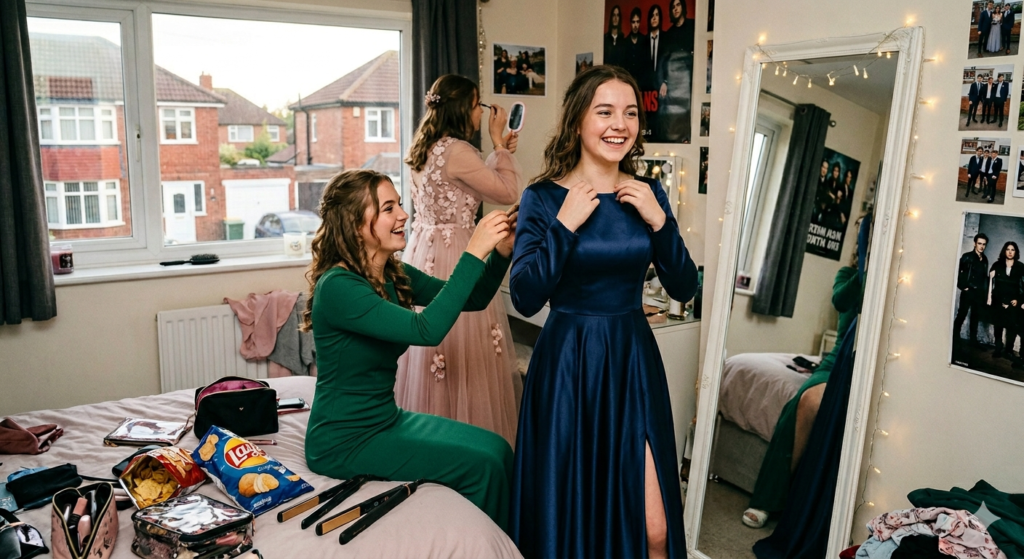
Hair and makeup should work with the neckline, colour, and detail of the dress. An open neckline may pair well with loose waves or an updo. A high neckline or detailed back can stand out more when the hair is lifted.
Makeup does not need to be heavy to photograph well. Good preparation, even coverage, defined eyes, and a suitable lip colour can create a polished result. Take test photos in daylight and evening light because flash can change how foundation, shimmer, and colour appear.
Keep the finished look recognisable as your own. Prom trends change, but real confidence photographs better than an outfit that feels like a costume. Use features you already enjoy and add one or two special details for the occasion.
Common Prom Dress Mistakes to Avoid
Buying without testing movement is a common mistake. A gown must work while sitting, walking, dancing, and using stairs. Waiting too long for alterations is another problem because a rushed hem or poorly adjusted bodice can affect the entire look.
Choosing a dress only because it is popular may also lead to regret. Corset bodices, high slits, sparkle, bows, and cut-outs can look appealing online, but not every trend suits every person’s comfort or event rules. Treat trends as inspiration, not instructions.
Inspect the zip, hooks, buttons, straps, beading, seams, and hem before paying. Check the fabric under strong light for marks or damage, especially when buying a sample, rental, or second-hand gown.
Avoid comparing your dress too closely with someone else’s. Two people can wear similar colours or shapes and still look different. Prom is not a style competition. It is a celebration and a chance to create good memories.
Prom Dress Trends That Feel Timeless
Clean satin gowns remain popular because they look elegant without heavy decoration. Corset-inspired bodices can add structure, while soft draping provides movement. Floral details, subtle sparkle, low backs, side slits, and statement bows can also make a dress feel current.
The key is moderation. One strong detail often has more impact than several competing features. A simple gown with a sculpted neckline may look more memorable than a design covered in every available trend.
Convertible features such as removable straps or detachable overskirts can change the look during the evening. Timeless style still depends more on fit, balanced colour, quality fabric, and confidence than any single trend.
Frequently Asked Questions About Prom Dresses
When Should I Start Shopping for a Prom Dress?
Start several months before the event when possible. Early shopping gives you more choice and leaves time for delivery, returns, alterations, shoes, and accessories.
How Much Should a Prom Dress Cost?
The right amount depends on your complete budget. Include alterations and accessories before deciding how much to spend on the gown. Affordable, rented, and second-hand dresses can look excellent with the right fit.
Should a Prom Dress Touch the Floor?
A full-length gown should normally fall close to the floor while allowing safe movement. The correct length depends on the shoes, fabric, and skirt shape, so a tailor may need to adjust the hem.
Can I Wear a Short Dress to Prom?
A short dress may be suitable when the dress code allows it. Choose a formal fabric and structured design. Midi and high-low dresses can also offer modern alternatives to a full-length gown.
What Colour Prom Dress Is Most Popular?
Black, red, navy, emerald, royal blue, blush, and pastel shades remain common choices. The best colour is the one that suits your style, photographs well, and makes you feel confident.
How Do I Know Whether a Prom Dress Fits Correctly?
The dress should stay secure while you walk, sit, raise your arms, and dance. You should breathe comfortably, and the straps, neckline, waist, and zip should remain in place.
What Should I Wear Under a Prom Dress?
Choose undergarments based on the neckline, back, fabric, and support of the gown. Seamless options often work well under fitted fabric. Wear them during alterations for an accurate fit.
Is It Better to Buy a Prom Dress Online or in a Shop?
Both options can work. Shops allow you to test fit and fabric, while online stores offer wider choice. Online buyers should check measurements, customer photos, delivery dates, return terms, and seller reliability.
Conclusion
Choosing between hundreds of prom dresses becomes easier when you focus on fit, comfort, personal style, and the practical needs of the event. Start early, set a complete budget, test every dress while moving, and leave enough time for alterations. Select a colour and fabric that look right in real lighting, then use shoes and accessories to create balance.
Your prom dress should help you enjoy the night, not distract you from it. Choose the gown that makes you feel comfortable, confident, and excited to celebrate. Begin your search with clear priorities, trust how the dress feels, and create a prom look that reflects who you are.s always a good idea to leave time for adjustments.