
Discover smart modest office outfits with practical styling tips, comfortable fabrics and polished ideas for every season and workplace.
Introduction
Getting dressed for work should not feel like a daily struggle between modesty, comfort and professionalism. The right outfit can give you coverage without hiding your personality or making you feel overdressed. It can also help you move easily between meetings, desk work, commuting and after-work plans. Modest Office Outfits can make this daily routine simpler, more comfortable and more professional.
Modest Office Outfits usually rely on clean lines, comfortable fabrics, suitable lengths and thoughtful layering. You do not need a wardrobe filled with expensive suits. A few well-chosen trousers, shirts, skirts, dresses and jackets can create many polished combinations. Modest Office Outfits also allow you to express your personal style while respecting workplace expectations. This guide explains how to build practical Modest Office Outfits that look professional, feel comfortable and suit modern office dress codes. With the right planning, Modest Office Outfits can help you feel confident and prepared throughout the working day.
What Makes an Office Outfit Smart and Modest?
A modest office outfit provides comfortable coverage while remaining appropriate for your role and workplace. Modest Office Outfits may include longer sleeves, higher necklines, loose-fitting trousers, midi skirts, maxi dresses or longline outer layers. However, modest clothing does not need to look shapeless, dull or overly formal.
The “smart” part comes from fit, fabric condition and coordination. A simple shirt can look professional when it is pressed, properly fitted and styled with structured trousers. The same shirt may look too casual when it is creased, oversized in the wrong places or paired with worn clothing. Modest Office Outfits should always look neat and well coordinated.
Modern workplaces are also becoming less formal. A YouGov survey found that smart casual clothing was the most common work style among British workers, while only 7% said they regularly wore a suit. This shows that professional clothing no longer has to mean a full matching suit every day. Modest Office Outfits can easily match this modern smart-casual approach.
The safest approach is to study your workplace. Notice what managers, experienced colleagues and client-facing employees wear. You can then create modest versions of those outfits while respecting your personal, religious or cultural preferences. Modest Office Outfits can be adapted to different workplace expectations. Well-planned Modest Office Outfits can also help you feel comfortable and confident.
Start With a Reliable Modest Workwear Foundation
A practical office wardrobe begins with versatile pieces that can be worn in several ways. Instead of buying a complete new outfit for every day, choose garments that work together. Neutral trousers, plain shirts, longline blazers, midi skirts and simple dresses can form the foundation of dozens of Modest Office Outfits.
Fit is important, but professional fit does not mean tight clothing. Your trousers should sit comfortably at the waist without pulling across the hips. Shirts should allow you to move your arms without creating gaps between buttons. Jackets should close easily and sit neatly across the shoulders. Well-fitted Modest Office Outfits should provide both coverage and comfort.
You should also consider the amount of time you spend sitting. An outfit may look attractive while you are standing in front of a mirror but feel uncomfortable after several hours at a desk. Sit down, reach forward and walk around before deciding whether an item is suitable for work. Comfortable Modest Office Outfits should support easy movement throughout the day.
Research into work-clothing design has examined how garment construction affects temperature, pressure and physical comfort. This supports a practical point: office clothing should not only look suitable but should also allow comfortable movement throughout the day. Carefully selected Modest Office Outfits can improve daily comfort, while practical Modest Office Outfits can help you remain polished and confident at work.
Choose Fabrics That Stay Comfortable All Day
Fabric can change the appearance and performance of Modest Office Outfits. Cotton and cotton blends are breathable and easy to wear, although pure cotton may crease quickly. Viscose and modal often create a soft drape, making them useful for loose shirts, wide-leg trousers and modest dresses. These materials can make Modest Office Outfits feel comfortable throughout the working day.
Wool and wool-blend trousers are suitable for colder months because they provide warmth while maintaining a polished shape. Linen is comfortable in hot weather, but it creases easily. A linen blend can offer similar breathability with a neater finish, making it suitable for seasonal Modest Office Outfits.
Avoid fabrics that are extremely thin, transparent or clingy under office lighting. A garment that looks opaque at home may become see-through near a window or under bright overhead lights. Check it in natural light before wearing it to work. Reliable Modest Office Outfits should provide suitable coverage in different lighting conditions.
Stretch can also improve comfort, especially in trousers and fitted jackets. A small amount of elastane may help the garment retain its shape and allow easier movement. However, very stretchy fabric can sometimes look more like casual or gym wear, so look for structured materials with a smooth finish when creating professional Modest Office Outfits.
Smart Modest Office Outfit Ideas
1. Longline Blazer With Wide-Leg Trousers
A longline blazer and wide-leg trousers create a strong, professional outline without feeling restrictive. Choose trousers that fall straight from the waist and stop just above the floor. Pair them with a tucked or partially tucked blouse to prevent the outfit from looking too loose.
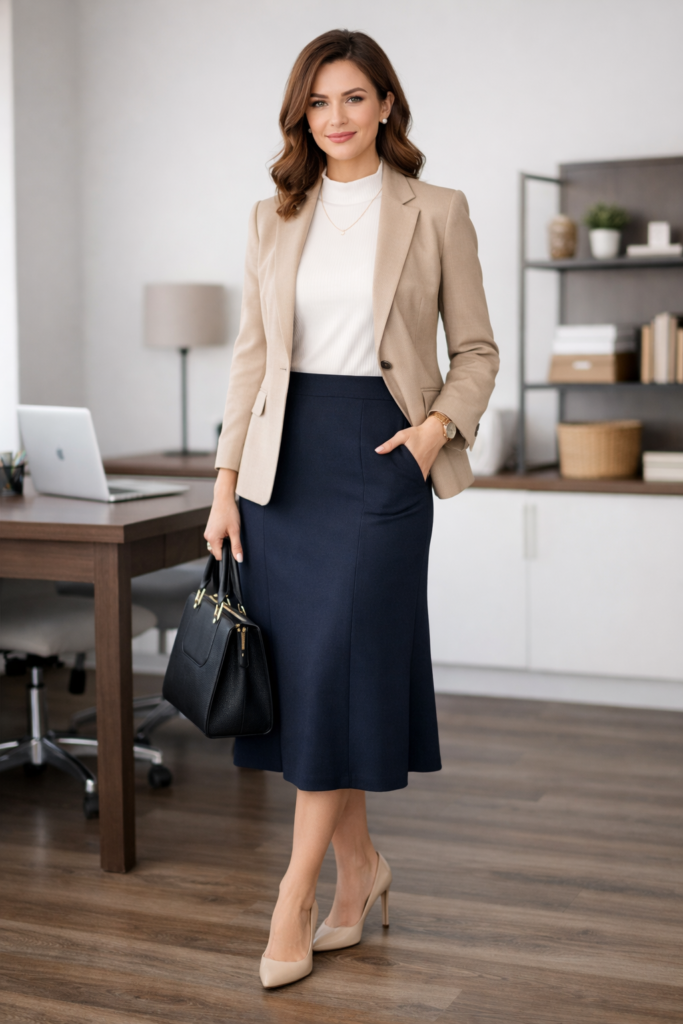
A matching blazer and trouser set works well for presentations, interviews and important meetings. For an everyday business-casual look, wear a navy blazer with beige, grey or black trousers. A lightweight knit top or high-neck blouse can complete the outfit while providing comfortable coverage.
2. Button-Up Shirt With Tailored Trousers
A button-up shirt is one of the most useful pieces in a modest work wardrobe. Choose a style with enough room across the shoulders and chest so the buttons remain flat. Hidden-button designs are especially useful if you want to avoid gaps.
Wear the shirt with straight-leg or gently tapered trousers for a clean office look. You can add a slim belt, structured handbag or simple watch for detail. If the shirt is slightly transparent, use a lightweight camisole or sleeveless base layer underneath rather than wearing several heavy layers.
3. Midi Dress With a Structured Jacket
A midi dress provides an easy one-piece solution for busy mornings. Look for a dress with a higher neckline, suitable sleeve length and a skirt that allows you to walk comfortably. Shirt dresses, wrap-effect dresses with secure coverage and softly tailored A-line styles work particularly well.
Add a blazer or cropped structured jacket to make the dress feel more formal. The jacket should finish at a flattering point and should not pull across the back. This combination can take you from regular office work to a client lunch without requiring a full outfit change.
4. Maxi Dress With a Belted Blazer
A simple maxi dress can become office-ready when paired with structured outerwear. Choose a plain dress or one with a small, controlled print. Avoid excessive gathering, sheer panels or very casual fabrics that make the dress look more suitable for the beach.
A belted blazer adds definition while maintaining coverage. The belt can be tied loosely rather than pulled tightly. Finish the outfit with loafers, low block heels or sleek ankle boots. This is also a practical hijab-friendly office outfit because the longer lines create a balanced, coordinated appearance.
5. Midi Skirt With a Fine-Knit Jumper
A midi skirt and fine-knit jumper create a soft but professional outfit for autumn and winter. Pleated, A-line and straight midi skirts can all work, provided they allow comfortable movement and do not ride up when you sit.
Choose a jumper made from fine wool, cotton or a smooth blend. Thick, oversized jumpers may look too casual in a formal office, while a fine knit sits neatly under a blazer or coat. Tuck a small section into the waistband or wear a slightly shorter jumper to keep the proportions balanced.
6. Monochrome Modest Work Outfit
A monochrome outfit uses different shades of one colour, such as cream, brown, grey, navy or black. This approach makes simple clothing look coordinated and intentional. It is especially helpful when you want to look polished without spending time matching several colours.
For example, combine charcoal trousers with a soft grey blouse and a darker grey blazer. Prevent the outfit from looking flat by mixing textures. A smooth blouse, knitted layer and structured bag can create visual interest even when the colours are similar.
7. Tunic Blouse With Straight-Leg Trousers
A tunic blouse offers extra length and coverage while remaining suitable for work. The best office tunics have clean seams, a controlled shape and minimal decoration. Avoid styles with too much volume, heavy embroidery or dramatic sleeves that may interfere with daily tasks.
Pair the tunic with straight-leg trousers rather than very wide bottoms. This creates balance and keeps the outfit from becoming overwhelming. A slim longline cardigan or open blazer can add another layer when the office is cold.
8. Waistcoat With a High-Neck Blouse
A tailored waistcoat can add structure without the weight of a full blazer. Wear it over a high-neck blouse or fitted long-sleeve top, then add wide-leg or straight trousers. The blouse should sit smoothly beneath the waistcoat without gathering around the armholes.
This outfit works well in creative offices, marketing agencies and modern business environments. Choose a longer waistcoat for additional coverage or a matching three-piece set for a more formal look. Keep jewellery simple so the tailoring remains the main feature.
9. Modest Co-Ord Set
A coordinated shirt-and-trouser set removes much of the effort from getting dressed. Look for a set made from a structured, non-transparent fabric rather than soft loungewear material. The shirt should have a clear collar, cuff or seam detail that gives it an office-ready appearance.
You can wear the pieces together or separate them. The shirt may work with black trousers, while the matching trousers can be paired with a knit top or blazer. This makes a good co-ord set more useful than a single dress that always produces the same look.
10. Relaxed Friday Outfit With Dark Denim
Some workplaces permit dark denim on casual Fridays. Choose jeans with a straight or wide-leg cut and an even, dark wash. Avoid ripped sections, faded patches, raw hems or excessive decoration.
Wear the jeans with a crisp shirt, longline blazer and polished footwear. This keeps the outfit relaxed without making it look careless. Before wearing denim, check your company policy because casual Friday standards vary between organisations.
How to Style Modest Office Outfits for Different Seasons
Summer office outfits need breathable fabrics, lighter colours and fewer heavy layers. A loose cotton shirt with tailored trousers is often more comfortable than a fitted synthetic dress. Unlined jackets, linen-blend trousers and lightweight maxi dresses can also help you stay cool.
Modesty does not require wearing several thick garments. A single well-designed blouse with opaque fabric may provide better coverage than a thin top worn over multiple layers. Selecting the right material can reduce heat while keeping the outfit professional.
During winter, layering becomes easier. Wear a thin thermal or fitted cotton layer beneath a blouse, dress or jumper. Add a longline blazer, tailored cardigan or wool coat. Several light layers are often more practical than one very bulky jumper because they can be removed as the temperature changes.
Office temperatures can vary greatly during the day. Studies of workplace environments consistently connect thermal comfort with employee comfort and self-perceived productivity. Keeping a light jacket, scarf or cardigan at your desk can therefore be a practical part of dressing for work.
Using Colour and Prints Professionally
Neutral colours make modest office clothing easier to coordinate, but your wardrobe does not need to consist only of black, grey and beige. Deep green, burgundy, dusty blue, rust, soft pink and plum can all look professional.
Use brighter colours with intention. A cobalt blouse can work well with navy trousers, while a burgundy dress can be softened with a camel blazer. Keeping the cut simple allows the colour to make an impact without making the outfit feel unsuitable for work.
Prints should generally support the outfit rather than dominate it. Pinstripes, checks, small florals and simple geometric patterns are easy to style. When wearing a printed skirt or shirt, pair it with plain pieces in colours taken from the pattern.
For hijab-friendly workwear, the same principle applies. A plain hijab can balance a printed blouse or dress, while a subtle printed hijab can add interest to a neutral outfit. Choose fabrics that stay secure and do not require constant adjustment during meetings or desk work.
Select Comfortable Shoes and Practical Accessories
Professional footwear should support the tasks you perform. Loafers, ballet flats, low block heels, smart ankle boots and simple leather trainers may all work, depending on your office. Closed shoes are often the safest choice in traditional or client-facing workplaces.
Do not assume that formal clothing requires high heels. UK workplace guidance states that dress-code requirements should be reasonable and should not unlawfully discriminate. It also advises employers to consider religious clothing and individual needs when setting workplace rules.
Accessories should make your day easier. A structured bag with separate sections can hold a laptop, charger, notebook and personal items without becoming disorganised. A simple watch, neat belt, understated necklace or small earrings can finish an outfit without creating visual clutter.
Common Modest Workwear Mistakes
One common mistake is choosing clothing that is too oversized. Loose clothing can provide coverage, but several very large pieces worn together may look untidy. Balance an oversized shirt with straight trousers or pair a full skirt with a cleaner, more fitted top.
Another mistake is ignoring garment condition. Pilling, loose threads, missing buttons, creases and worn shoes can weaken an otherwise professional outfit. Regular care often makes a greater difference than buying more clothes.
Poor layering can also create discomfort. Too many layers may restrict movement and become hot, while a thin outer layer may not provide the expected coverage. Test complete outfits before work rather than assuming each piece will sit correctly.
Finally, do not copy an outfit without considering your job. Someone working in a creative studio may have more freedom than someone working in law, finance, healthcare or a formal government department. The best smart modest office outfits reflect both personal values and professional responsibilities.
Frequently Asked Questions
How can I dress modestly and professionally for work?
Choose clothing with comfortable coverage, clean lines and a suitable fit. Tailored trousers, midi skirts, longer dresses, high-neck blouses and structured jackets can create professional outfits without feeling revealing or restrictive.
Focus on fabric quality and garment condition. Simple clothing often looks smarter when it is pressed, coordinated and paired with polished shoes.
What should a modest woman wear to an office?
A modest office wardrobe may include wide-leg trousers, button-up shirts, longline blazers, midi skirts, maxi dresses and fine-knit tops. The exact combination should match the workplace dress code.
You can also add a hijab, scarf, cardigan or lightweight underlayer according to your personal preferences. Choose pieces that stay secure and comfortable throughout the day.
Can maxi dresses be worn in an office?
Yes, a maxi dress can be suitable for work when it has a professional cut and is made from an opaque, structured fabric. Plain colours and controlled prints are usually easier to style.
Add a blazer, smart belt or tailored cardigan to give the dress more structure. Avoid beach-style fabrics, excessively loose shapes and hems that create a tripping risk.
Are wide-leg trousers appropriate for work?
Wide-leg trousers are appropriate for most offices when they are tailored and the correct length. They should sit neatly at the waist and should not drag across the floor.
Pair them with a tucked blouse, fine-knit jumper or structured blazer. This creates a balanced shape and prevents the outfit from appearing too casual.
How can I make modest outfits look less boring?
Use colour, texture, tailoring and small accessories to create interest. A burgundy blouse, checked blazer or pleated skirt can refresh a neutral office wardrobe.
You can also try monochrome dressing, subtle prints or contrasting fabrics. The goal is to add personality without making the outfit distracting.
What is the best modest outfit for a job interview?
A longline blazer, high-neck blouse and tailored trousers form a reliable interview outfit. A structured midi dress with a jacket is another strong option.
Choose neutral or muted colours, clean shoes and minimal accessories. Your clothing should allow you to sit, walk and speak comfortably without needing frequent adjustments.
Conclusion
Smart modest office outfits are built around balance. They provide suitable coverage while helping you look polished, capable and prepared for the working day. You do not need to follow every fashion trend or buy a large number of clothes. A smaller wardrobe of coordinated trousers, shirts, skirts, dresses and jackets can provide more value.
Begin by checking your workplace dress code and identifying the pieces you already wear regularly. Improve your wardrobe gradually by adding comfortable fabrics, reliable layers and colours that work together. Review your current workwear this week, create several complete outfit combinations and note any missing piece that would make them more practical. A thoughtful wardrobe will make getting dressed easier and help you approach each workday with greater confidence.