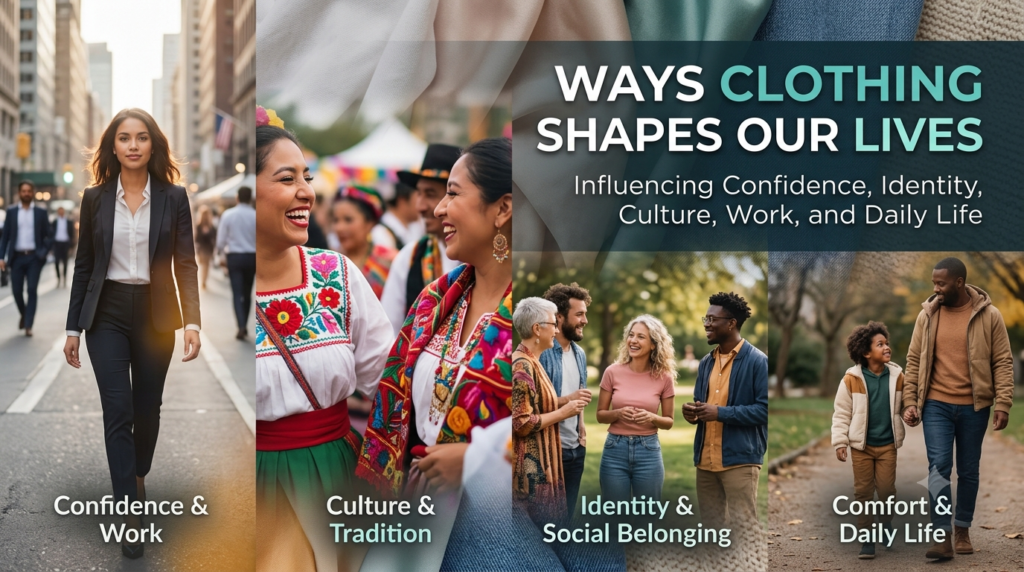

Discover powerful Ways Clothing Shapes Our Lives, influencing confidence, identity, culture, work, and daily life in surprising ways.
Introduction
Clothing is something we use every single day without thinking too deeply about it. We wake up, open our wardrobe, and pick something that feels right for the moment. But behind that simple habit lies a powerful force that quietly influences how we think, how we behave, and how others respond to us.
The truth is simple. Ways Clothing Shapes Our Lives go far beyond fashion or appearance. Clothing affects emotions, identity, social behavior, confidence, culture, and even our decisions in work and personal life. It is not just what we wear. It is part of how we experience life itself.
Ways Clothing Shapes Our Lives in First Impressions
The first way clothing shapes our lives is through first impressions. Before we speak, our clothing already sends signals. These signals help others quickly form opinions about who we are, what role we play, or what situation we are in.
A neat outfit in a job interview can suggest responsibility and readiness. A uniform can signal authority or service. Casual clothing can suggest relaxation or creativity depending on the setting. These impressions are formed in seconds, even before a conversation begins.
However, clothing is not the full story of a person. It only provides clues. Still, in real-world situations like meetings, social events, or public spaces, clothing often becomes the starting point of judgment. This is why dressing appropriately for the situation matters. It helps communication begin on the right note.
Ways Clothing Shapes Our Lives Through Confidence and Emotion
One of the most powerful Ways Clothing Shapes Our Lives is through confidence and emotional state. The clothes we wear can influence how we feel inside.
When someone wears something clean, comfortable, and well-fitted, they often feel more confident. On the other hand, uncomfortable or poorly fitting clothes can create distraction and reduce self-assurance. This happens because clothing affects posture, movement, and self-awareness.
There is also a psychological effect behind clothing. Studies in behavioral science suggest that clothing can influence thinking patterns and focus when the outfit holds meaning for the wearer. This is why people often feel more productive in work clothes or more active in sportswear.
In daily life, this shows up in simple ways. A student may focus better when dressed for study. A professional may feel more alert in formal wear. Even at home, changing from sleepwear into regular clothes can improve motivation and structure the day.
Clothing does not create confidence on its own, but it supports the mindset we want to build.
Ways Clothing Shapes Our Lives in Identity and Self-Expression
Another important way clothing shapes our lives is through identity. Clothing allows us to express who we are without saying a word. It becomes a visual language of personality, taste, and values.
Some people prefer simple clothing because they value comfort and calmness. Others choose bold colors or unique designs to express creativity and energy. Over time, these choices form a personal style that reflects identity.
Clothing also changes as people grow. What we wear in school is different from what we wear at work. What we wear in youth often evolves as we gain experience and responsibilities. This change is natural and reflects personal development.
In many cases, clothing also carries emotional meaning. A jacket from a special moment or a shirt from a meaningful event can hold memories. These items become part of personal history, not just fashion.
Ways Clothing Shapes Our Lives Through Culture and Tradition
Culture is deeply connected to clothing, making this another strong part of Ways Clothing Shapes Our Lives. Across the world, clothing represents traditions, beliefs, celebrations, and identity.
Traditional outfits worn during festivals or weddings often carry symbolic meaning. Colors, fabrics, and designs can represent values, heritage, or family history. These garments connect people to their roots and preserve cultural identity.
Clothing also helps pass traditions from one generation to another. When younger people wear traditional attire, they keep cultural stories alive. At the same time, modern fashion often blends traditional elements with new styles, creating a connection between past and present.
This cultural side of clothing shows that fashion is not just personal. It is also shared across communities and history.
Ways Clothing Shapes Our Lives in Work and Professional Settings
Work environments are another area where clothing plays a major role. In many professions, clothing is not just about appearance but also about function and safety.
Uniforms help identify roles in workplaces such as hospitals, schools, and service industries. Protective clothing is essential in construction, engineering, and other physical jobs. In offices, professional attire often helps set the tone for discipline and focus.
Even in remote work, clothing still matters. Many people find they perform better when they dress as if they are going to work, even if they stay at home. This helps separate personal time from professional responsibility.
Work clothing also influences how colleagues and clients perceive professionalism. While styles have become more relaxed in many industries, appropriate dressing still supports trust and respect in professional environments.
Ways Clothing Shapes Our Lives in Social Belonging
Clothing also shapes how we connect with others. People often use clothing to feel part of a group, community, or shared identity.
School uniforms create equality among students. Sports jerseys connect fans to teams. Matching outfits at events or gatherings create a sense of unity. These examples show how clothing helps build belonging.
However, clothing can also create pressure. Social media trends and brand culture sometimes make people feel they must dress a certain way to be accepted. This can lead to comparison and unnecessary spending.
A healthier approach is to use clothing for connection, not competition. True belonging comes from shared values and relationships, not just appearance.
Ways Clothing Shapes Our Lives in Comfort and Body Experience
Comfort is one of the most practical Ways Clothing Shapes Our Lives. The right clothing supports the body, while the wrong clothing can create stress and discomfort.
Well-designed clothing allows natural movement, proper breathing, and physical ease. Poor-quality or poorly fitting clothing can distract the mind and affect performance throughout the day.
Footwear is a clear example. Comfortable shoes can improve posture, energy, and daily productivity. Uncomfortable shoes can affect mood and even health.
This shows that clothing is not only about looks. It directly affects how we experience our bodies in daily life.
Ways Clothing Shapes Our Lives in Spending and Choices
Clothing also influences financial behavior. People often make buying decisions based on emotion, trends, or social influence rather than need.
Fast-changing fashion trends can encourage frequent buying, which may lead to waste or overspending. On the other hand, thoughtful clothing choices can lead to better long-term value.
Choosing quality items that last longer often saves money over time. Building a practical wardrobe based on real needs is more effective than constantly chasing new styles.
This financial side shows that clothing affects not only appearance but also economic habits.
Ways Clothing Shapes Our Lives in Memory and Emotion
Clothing also holds emotional value. Many people keep clothes linked to memories, even if they no longer wear them.
A graduation outfit, a wedding dress, or a gift from a loved one can carry emotional meaning. These items remind people of important life moments.
Clothing can also support emotional transitions. People often change their style after major life changes, using clothing as a way to reflect a new chapter in life.
In this sense, clothing becomes part of personal memory and emotional storytelling.
Ways Clothing Shapes Our Lives in Daily Practical Life
At its core, clothing serves a practical purpose. It protects the body, supports movement, and helps us adapt to different environments.
Warm clothing protects in cold weather. Light clothing helps in heat. Work clothing supports tasks. Sports clothing improves performance.
Without this practical function, daily life would be much harder. Clothing is essential for safety, comfort, and basic living.
Conclusion
The Ways Clothing Shapes Our Lives are present in nearly every part of our daily experience. From confidence and identity to culture, work, comfort, and memory, clothing plays a silent but powerful role.
It influences how we see ourselves and how others see us. It affects how we feel, how we behave, and how we connect with the world around us.
The goal is not to overthink every outfit, but to become aware of clothing’s impact. When we choose clothing with intention, we use it as a tool for comfort, confidence, and self-expression rather than pressure or confusion.
Clothing will always shape life in some way. The real question is how we choose to shape that influence in return.
FAQs
What are the main Ways Clothing Shapes Our Lives?
Clothing shapes life through confidence, identity, culture, work performance, comfort, social belonging, and emotional expression.
How does clothing affect confidence?
Clothing affects confidence by influencing comfort, posture, and self-perception. Well-fitted and appropriate clothing often improves self-assurance.
Why is clothing important in daily life?
Clothing is important because it provides protection, supports comfort, and helps people express identity and social roles.
Can clothing change how others see you?
Yes, clothing can influence first impressions by signaling personality, profession, or mood before a conversation begins.
How does clothing connect to culture?
Clothing reflects cultural traditions, festivals, and identity. It helps preserve heritage and pass it to future generations.
Does clothing affect mood?
Yes, clothing can affect mood by influencing comfort, confidence, and mental focus, especially when the outfit has personal meaning.?
Appropriate workplace clothing can create positive first impressions, demonstrate professionalism, and increase confidence during interviews, meetings, and daily work.
What should people consider before buying clothing?
Shoppers should evaluate fit, comfort, fabric quality, versatility, durability, maintenance requirements, and long-term value instead of focusing only on trends or price.