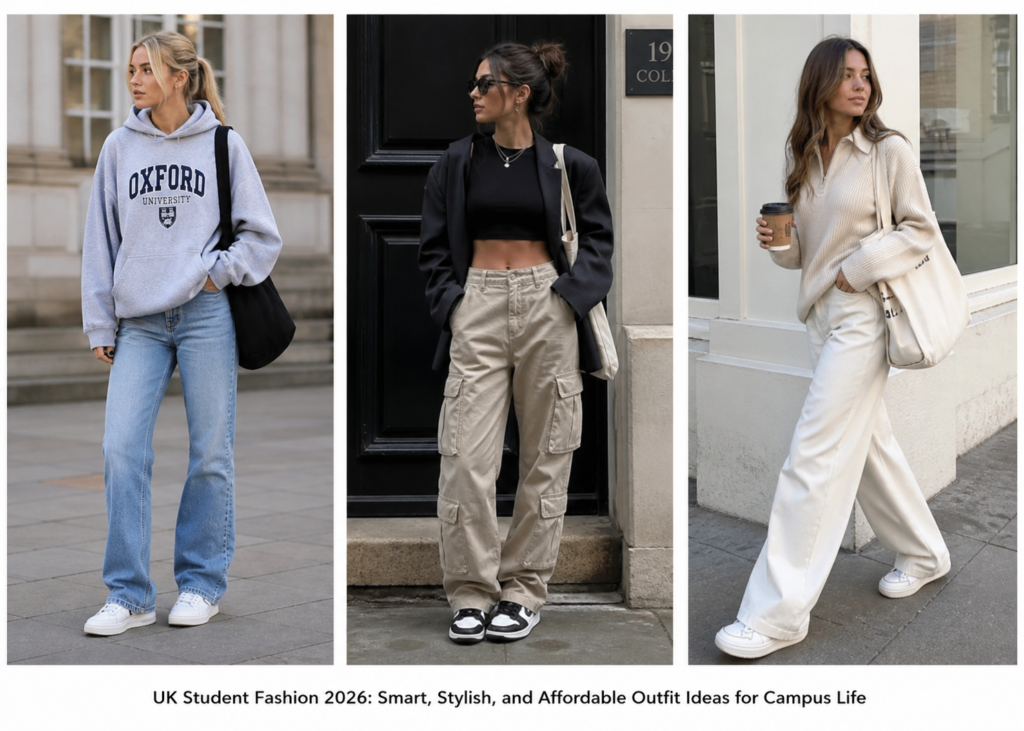

Discover UK Student Fashion 2026, including budget shopping tips, stylish university outfits, and easy ways to upgrade your campus wardrobe..
Introduction
UK Student Fashion 2026 is practical, expressive and more personal than ever. Students are mixing vintage finds, relaxed sportswear, smart basics and bold accessories instead of following one strict look. The best UK Student Fashion 2026 outfits work for lectures, library sessions, society events, part-time jobs and unpredictable British weather.
A good university wardrobe does not need to be large or expensive. It needs pieces that work together, feel comfortable and suit real student life. UK Student Fashion 2026 focuses on versatile clothing that students can style in several ways without spending too much money.
Sustainability is also influencing UK Student Fashion 2026, as more young people shop from charity stores, vintage markets and resale platforms. Comfortable layers, durable footwear and weather-ready jackets are becoming essential parts of UK Student Fashion 2026 across campuses.
Students are also using UK Student Fashion 2026 to show their personality through colours, accessories, vintage pieces and creative layering. At the same time, UK Student Fashion 2026 remains focused on comfort, affordability and clothing that can handle busy university routines.
This guide explores the biggest trends shaping UK Student Fashion 2026, including seasonal outfit ideas, affordable styling tips and practical ways to build a confident university wardrobe.
What Is Shaping UK Student Fashion in 2026?
Student style now moves quickly because ideas travel through social media, music, campus culture and street fashion. However, students are becoming more selective. In UK Student Fashion 2026, many are adding one current item to clothes they already own rather than buying a complete outfit for every new trend.
Comfort remains central to UK Student Fashion 2026. Oversized shirts, straight-leg jeans, roomy trousers, trainers, knitwear and practical jackets suit long days on campus. Students then use accessories, colour and layering to make these everyday basics feel more personal.
Current fashion coverage points to dark denim, scholarly knitwear, sporty dressing, utility pieces, bohemian details and colour blocking as visible themes in 2026. Spring and summer collections have also featured pyjama-style trousers, floral skirts, lace trims and summer boots, while autumn fashion is giving more attention to shaped blazers and practical shirts.
Campus fashion works best when a trend can survive a crowded bus, a rainy walk and several hours in a lecture theatre. This practical approach defines UK Student Fashion 2026 and separates a useful student outfit from a short-lived social media look.
The Main UK University Fashion Trends for 2026
Relaxed Tailoring
Relaxed tailoring is one of the easiest ways to look polished without appearing overdressed. In UK Student Fashion 2026, a loose blazer, plain T-shirt, wide-leg trousers and trainers can work well for lectures, presentations and casual meetings. The same blazer can also be worn over a dress, hoodie or knitted top.
Grey, navy, brown and black remain useful because they match many colours. Students following UK Student Fashion 2026 can create a fresher look with soft green, burgundy or pale blue. The fit should allow easy movement through the shoulders and arms while still keeping the outfit neat.
Second-hand blazers are often better value than cheap new ones. This practical approach reflects the affordable and sustainable side of UK Student Fashion 2026. Older jackets may use heavier fabric and stronger construction, so check the lining, buttons, cuffs and underarms carefully before buying.
Dark Denim and Straight-Leg Jeans
Dark denim has returned as a strong high-street trend for 2026, especially in clean straight-leg shapes. In UK Student Fashion 2026, it is ideal for students because it works with sweatshirts, shirts, fitted tops, knitwear and jackets.
A dark indigo or washed black pair can move from daytime to evening with little effort. Students following UK Student Fashion 2026 can wear dark denim with trainers and a rugby shirt for class, then change into boots and add a structured jacket for dinner.
Fit matters more than the label when choosing jeans for UK Student Fashion 2026. Sit down, walk and bend your knees before buying. The waistband should feel secure without digging in, and the hem should work with the shoes you wear most often.
Sporty and Retro Campus Style
Retro sportswear continues to influence UK campus outfits. Rugby tops, track jackets, football-inspired shirts, zip-neck sweatshirts and old-school trainers bring colour and personality to basic clothing.
Try a vintage track jacket with plain trousers and clean trainers. A rugby shirt works well with straight jeans or a midi skirt. A football-style top can be layered over a long-sleeve T-shirt during colder months.
The key is balance. One strong sports piece usually creates a clearer outfit than several loud items worn together. Second-hand sportswear is especially useful because older designs often have unusual colours and embroidered details.
Literary and Preppy Details
Campus-inspired fashion has become more visible, with cardigans, V-neck jumpers, polos, loafers, pleated skirts and rugby shirts appearing across student and high-street style. In UK Student Fashion 2026, university aesthetics are also influencing wider youth culture and everyday clothing choices.
The modern version is less formal than traditional preppy dressing. A striped shirt may be worn open over a vest, while a V-neck knit can be paired with loose jeans rather than tailored trousers. Students following UK Student Fashion 2026 can also style loafers with white socks and a relaxed skirt.
This trend suits university life because most pieces are easy to repeat. A cardigan can work in a seminar, café, library or evening event, and it layers well under a trench coat. This versatility makes campus-inspired clothing a practical part of UK Student Fashion 2026.
Utility Clothing and Personal Accessories
Utility fashion focuses on practical details such as large pockets, strong fabrics and adjustable hems. Cargo trousers, overshirts, chore jackets and crossbody bags all fit this style.
Neutral shades such as khaki, stone, charcoal and navy make utility pieces easier to combine. A chore jacket can replace a blazer in casual settings. Accessories such as scarves, belts, caps and jewellery can make repeated outfits feel new. Choose pieces that still support daily life.
Building an Affordable Student Wardrobe
A useful student wardrobe begins with a clear plan. Before shopping, look at your weekly routine. Consider how many days you attend campus, whether you work part time, how often you go out and how much walking you do.
Start with clothes you can wear at least once a week. Comfortable jeans, loose trousers, basic tops, a warm jumper, an overshirt, a waterproof coat and everyday shoes form a strong base. These pieces make trend-led items easier to style.
Price pressure remains relevant. Official UK figures showed that clothing and footwear prices were 0.7% higher in April 2026 than a year earlier. Student finance also depends partly on household income and living arrangements, so available spending money can vary widely. A realistic clothing budget is more useful than copying expensive online hauls.
Set a monthly amount for clothing rather than shopping whenever a sale appears. Save part of it for replacements.
Cost per wear is another useful test. A £50 coat worn 100 times costs 50 pence per wear, while a £20 party top worn once costs £20 per wear.
Before buying anything, imagine three outfits using clothes you already own. If you cannot create three combinations, the item may be difficult to use. Photograph successful outfits so you can repeat them on busy mornings.
Second-Hand, Vintage and Sustainable Student Style
Second-hand fashion suits student life because it can lower costs while helping people find unusual pieces. Charity shops, vintage markets, clothing swaps and resale platforms all offer alternatives to buying new.
The best second-hand purchases are often coats, denim, knitwear, leather bags, shirts and occasion wear. These items can remain useful for years when the fabric and construction are strong. Check seams, zips, hems and care labels carefully.
Do not buy an item only because it is cheap. A £5 shirt that never leaves the wardrobe still wastes money and space. Think about fit, comfort and outfit options before paying.
Clothing swaps also create variety without constant spending. Basic care matters too. Follow the label, air-dry suitable items and repair small faults before they become worse.
Dressing for British Weather on Campus
British weather can change quickly, so layering is more useful than relying on one heavy item. A T-shirt, overshirt, jumper and light waterproof jacket give more control than a single thick coat.
For autumn, combine straight-leg jeans, a long-sleeve top, cardigan and trench coat. In winter, use thermal base layers under normal clothes. This keeps the outfit warm without creating too much bulk.
Spring needs flexible layers. A shirt, light knit and waterproof jacket can handle a cool morning and a warmer afternoon. During summer, choose breathable cotton or linen-blend clothing, but carry a light outer layer for evening travel.
A good campus coat should cover the clothes underneath without pulling across the back. Test it while wearing a jumper. Look for secure pockets, a working hood and enough length to protect you in rain.
Footwear also needs practical thought. Leather or water-resistant boots can be useful in winter, while clean trainers suit most casual outfits. Keep one comfortable pair for long walking days and one smarter pair for presentations or events.
Easy Outfit Ideas for Student Life
Lecture and Library Outfits
For a normal lecture day, wear dark straight-leg jeans, a plain top, an overshirt and comfortable trainers. Add a tote or backpack that can hold your laptop and notes.
Loose trousers with a fitted long-sleeve top and cardigan create another easy option. The contrast between a relaxed lower half and a closer top keeps the outfit balanced.
For long library sessions, avoid waistbands, collars or shoes that become uncomfortable after several hours. Comfort can help you stay focused, while a neat outer layer keeps the outfit presentable.
Seminar and Presentation Outfits
Presentations usually need a slightly sharper look, but a full suit is rarely necessary. Try tailored trousers, a plain knit and relaxed blazer. Clean loafers, boots or simple trainers can complete the outfit.
A midi dress with a cardigan and structured bag also works well. Choose clothing that lets you stand, move and breathe comfortably. Avoid wearing new shoes for the first time on presentation day.
Prepare the outfit the night before. Check for creases, loose threads and missing buttons. Small details often have more impact than expensive clothing.
Society Events and Student Nights
Student nights require clothes that feel confident but remain practical. A dark denim outfit, fitted top and leather-style jacket can work for many venues. A midi skirt with boots and a knitted top offers a softer option.
For society dinners, try wide-leg trousers with a satin shirt or a simple dress with a blazer. Add one stronger accessory, such as earrings, a patterned bag or bold shoes.
Consider the full journey. You may need to walk, use public transport or wait outside. Carrying a light coat is usually better than spending the evening cold.
Part-Time Work and Placements
For part-time work, follow the employer’s dress code first. In a casual workplace, dark jeans, a clean polo or shirt and practical shoes may be enough. In an office, tailored trousers, a simple top and cardigan or blazer create a professional look.
Placements often require repeatable outfits. Build a small work capsule using two pairs of trousers, several tops and one or two outer layers. Neutral colours make daily combinations easier.
Clothes should be clean, comfortable and suitable for the task. A student working in retail, hospitality, healthcare or a studio may need very different footwear and fabrics from someone in an office.
How to Find Your Personal Campus Style
Personal style develops through repetition. Pay attention to the outfits you choose when you feel comfortable and confident. Those choices reveal more than a saved folder full of trend images.
Choose three words to describe how you want your clothes to feel. You might choose relaxed, clean and creative, or practical, colourful and vintage. Use those words when shopping.
Create a simple outfit formula. It may be loose trousers, a fitted top and an oversized layer. It could be jeans, knitwear and boots. Repeating a formula is not boring because colours, fabrics and accessories can change.
Avoid comparing your wardrobe with students who receive free clothes, create fashion content or have a larger budget. Strong personal style comes from knowing what works for your body, routine and comfort.
Take time before joining a micro-trend. Save the item, wait several days and decide whether you still want it. This pause reduces impulse buying and helps you choose clothes with longer value.
Common UK Student Fashion Mistakes
The first mistake is buying for an imagined university life. Some students purchase formal coats, party clothes or uncomfortable shoes that do not match their real routine. Shop for the life you live most weeks.
The second mistake is ignoring fabric and care. A cheap jumper that loses shape after two washes may cost more over time than a better-made option. Check the label and feel the fabric before buying.
Another mistake is choosing style over movement. University days can involve stairs, buses, cycling, walking and long periods of sitting. Test every item in motion.
Do not buy several versions of the same trend. One useful cargo trouser or rugby shirt may be enough. Alterations and repairs can also return old favourites to regular use.
FAQs About UK Student Fashion 2026
What Clothes Are Popular With UK Students in 2026?
Popular choices include straight-leg dark denim, relaxed blazers, rugby shirts, retro sportswear, cardigans, utility trousers and comfortable trainers. Students are mixing these pieces with vintage items and personal accessories.
How Can a Student Look Stylish on a Low Budget?
Build outfits around repeatable basics, shop second-hand and buy only items that work with clothes you own. Focus on fit, condition and cost per wear rather than brand names.
What Should I Wear to University in the UK?
Wear comfortable layers that suit your timetable and the weather. Jeans or loose trousers, a simple top, knitwear, practical shoes and a waterproof outer layer work for most campus days.
How Many Outfits Does a University Student Need?
There is no fixed number. A small wardrobe that creates enough combinations for one or two weeks is usually more useful than many separate outfits that do not work together.
Are Vintage Clothes Still Fashionable in 2026?
Yes. Vintage and second-hand pieces remain popular because they offer individuality and value. Retro sportswear, denim, jackets and knitwear are especially easy to use.
What Should Students Wear for Presentations?
Choose a neat outfit that feels natural. Tailored trousers with a knit and blazer, or a simple dress with a cardigan, can look professional without feeling too formal.
How Do Students Dress for Winter in the UK?
Students usually rely on layers, warm knitwear, thermal basics, waterproof coats and practical shoes. A scarf, gloves and a secure bag also make cold journeys easier.
Conclusion
UK student fashion in 2026 is not about buying every new trend. It is about creating comfortable, useful outfits that express your personality and work across real campus life. Dark denim, relaxed tailoring, retro sportswear, practical layers and second-hand finds can all become part of a strong student wardrobe.
Start by reviewing what you already own. Keep the pieces you wear often, repair useful items and identify the true gaps. Then choose one versatile addition at a time. Build your wardrobe around your routine, your budget and your style, and you will have campus outfits that feel current without becoming disposable. A useful wardrobe does not need dozens of new pieces. It needs reliable basics, practical layers, comfortable shoes and a few items that reflect your personality.
Begin with the clothes you already own, identify genuine gaps and buy slowly. Choose pieces that can handle lectures, walking, changing weather and social plans. Use second-hand shops, swaps and repairs to stretch your budget further. Start building your campus wardrobe today by planning three complete outfits from your current clothes before buying anything new.