
Discover the best Pilates socks for grip, comfort, and balance. Improve stability, hygiene, and performance with expert tips and top pick
Introduction
Pilates is all about control, balance, and smooth movement. Every small detail matters, including what you wear on your feet. Many people think socks are just a small accessory, but in Pilates, they play a big role. The right pair of best Pilates socks can improve grip, prevent slipping, and help you feel more stable on the mat or reformer machine.
In recent years, Pilates has become very popular across all age groups. With this rise, the demand for the best Pilates socks has also grown. People now want socks that are not only comfortable but also safe and stylish.
This guide will help you understand what makes Pilates socks important, how to choose the right pair, and what features truly matter. You will also learn how they improve performance in real workouts and what to avoid when buying them.
Why Pilates Socks Matter More Than You Think
Pilates is different from regular workouts. It focuses on slow and controlled movements. Even a small slip can affect your form or cause discomfort. This is where Pilates socks become essential, and choosing the best Pilates socks can make a real difference in stability and safety.
They are designed with special grip patterns on the bottom. These grips help you stay stable on smooth surfaces like wooden studio floors or reformer machines. Without them, your feet may slide, especially during challenging poses.
Another reason Pilates socks matter is hygiene. In many studios, people prefer not to exercise barefoot. Socks act as a clean barrier between your feet and shared equipment, especially when using the best Pilates socks for better protection and cleanliness.
Comfort is another key factor. Good Pilates socks keep your feet warm without making them sweaty. This helps you stay focused during your session instead of worrying about discomfort.
What Makes the Best Pilates Socks
When looking for the best Pilates socks, there are a few important things to consider. These factors directly affect your performance and comfort during workouts.
Grip Quality and Stability
The most important feature is grip. High-quality Pilates socks have silicone or rubber patterns on the sole. These grips help you stay balanced during movements like planks, lunges, or reformer footwork, which is why choosing the best Pilates socks is so important for safety and performance.
A strong grip reduces the risk of slipping, especially when you sweat. It also helps you maintain proper form, which is essential for results in Pilates. That’s why many instructors recommend using the best Pilates socks during every session for better control and stability.
Breathable and Soft Fabric
Comfort depends a lot on fabric. The best Pilates socks are usually made from cotton blends, bamboo fiber, or moisture-wicking materials. These fabrics allow air flow and keep your feet dry.
Breathability also helps prevent odor and irritation. This is important for long workout sessions or hot studio environments.
Proper Fit and Flexibility
A good fit is essential. Socks that are too tight can restrict movement, while loose socks may slip off during exercise. The best Pilates socks fit snugly but still allow natural foot movement.
Flexibility is also important because Pilates involves stretching your feet in different directions. The sock should move with your foot, not against it.
Durability for Long-Term Use
Pilates socks go through a lot of movement and pressure. Good quality socks last longer even after multiple washes. Reinforced stitching and strong grip material help maintain durability.
Cheap socks may lose grip quickly, which can affect safety and performance.
Different Types of Pilates Socks
Not all Pilates socks are the same. Different styles are designed for different needs and preferences.
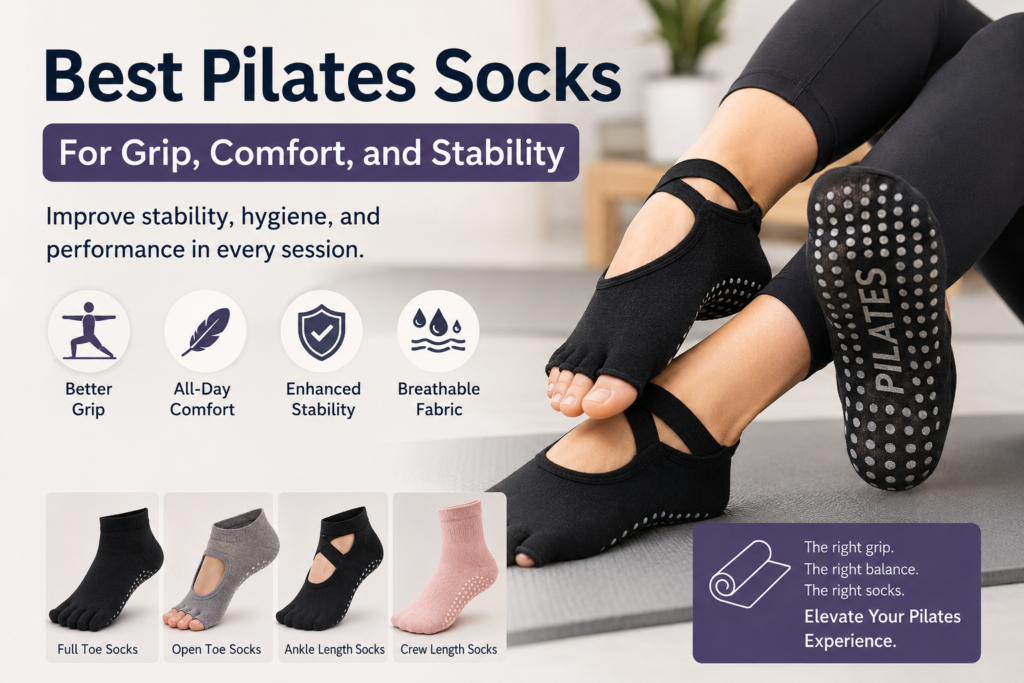
Full Toe Pilates Socks
These socks cover all toes separately. They allow better toe movement and grip. Many people prefer them because they feel more natural, almost like being barefoot.
Full toe socks also help improve balance because your toes can spread freely during exercises.
Open Toe Pilates Socks
Open toe socks leave the toes exposed while covering the rest of the foot. This design is popular in warmer climates or for people who prefer more freedom in their toes.
They still provide grip on the sole while allowing better airflow.
Ankle Length Pilates Socks
Ankle length socks are the most common type. They provide a balance of comfort, grip, and protection. They are easy to wear and work well for beginners and advanced users.
Crew Length Pilates Socks
Crew length socks go higher up the ankle or lower calf. They offer extra warmth and are often chosen during colder seasons. They also provide a stylish studio look.
How Pilates Socks Improve Your Workout Performance
Wearing the right socks can make a real difference in how you perform during Pilates.
Better grip means better control. When your feet stay stable, your body can focus on form instead of balance. This improves the quality of every movement.
They also help reduce muscle fatigue. When you are not constantly adjusting your footing, your muscles can work more efficiently. This leads to smoother transitions between exercises.
Another benefit is confidence. When you feel secure, you naturally perform better. Many beginners struggle with slipping, but good Pilates socks solve this problem quickly.
In real studio environments, instructors often recommend grip socks because they help maintain consistent alignment. This is important for avoiding strain and improving results over time.
Common Mistakes When Buying Pilates Socks
Many people choose socks based only on appearance. While style matters, performance should always come first.
One common mistake is ignoring grip quality. Some socks look good but have weak grip patterns that wear off quickly.
Another mistake is choosing the wrong size. Socks that are too large can bunch up inside shoes or during movement, causing discomfort.
People also often ignore fabric quality. Low-quality material can trap sweat, leading to odor and irritation.
Lastly, some buyers choose fashion over function. While stylish socks are popular, they should still support movement and safety.
Real-Life Example of Pilates Sock Benefits
Consider a beginner joining a Pilates reformer class for the first time. Without grip socks, they may struggle to stay stable on the machine. Their feet might slip during footwork exercises, making the session frustrating.
Now imagine the same person wearing high-quality Pilates socks. Their feet stay firmly in place, even during controlled resistance movements. This allows them to focus on breathing, posture, and flow instead of worrying about slipping.
Over a few weeks, they notice improved balance and stronger core engagement. This simple change in footwear creates a better overall workout experience.
How to Care for Your Pilates Socks
Taking care of Pilates socks is simple but important. Proper care increases their lifespan and keeps the grip effective.
Always wash them in cold or lukewarm water. Hot water can damage the grip material over time. It is also better to air dry them instead of using a dryer, as heat can weaken elasticity.
Avoid using strong bleach or harsh chemicals. These can reduce fabric quality and make socks less comfortable.
If possible, wash them after every intense workout. This keeps them fresh and hygienic for your next session.
Who Should Use Pilates Socks
Pilates socks are useful for everyone, not just professionals. Beginners benefit the most because they need extra stability while learning movements.
Advanced practitioners also use them for better control during complex routines. They are also great for people practicing yoga, barre, or general fitness workouts.
Even people who do home workouts find them helpful because they improve grip on smooth floors.
Benefits Beyond Pilates
Although designed for Pilates, these socks are also useful in other situations. They are great for yoga sessions, light gym workouts, and even home use.
Some people wear them while traveling or doing stretching exercises at home. Their comfort and grip make them versatile beyond studio settings.
They also help in cold weather by keeping feet warm without feeling heavy.
How to Choose the Right Pair for You
Choosing the best Pilates socks depends on your personal needs. If you want maximum stability, go for full toe grip socks. If you prefer comfort and airflow, open toe socks may be better.
For regular studio workouts, ankle length socks are usually the most practical choice. If you like extra coverage or warmth, crew length is a good option.
Always focus on grip strength, fabric quality, and fit before style. These three factors matter most for performance and safety.
Conclusion
The best Pilates socks are more than just workout accessories. They improve stability, enhance comfort, and support better performance in every session. Whether you are a beginner or an advanced practitioner, the right pair can make a noticeable difference in how you move and feel during Pilates.
If you want to improve your balance, reduce slipping, and enjoy a more confident workout experience, investing in quality Pilates socks is a smart choice. Start by choosing a pair that fits well, feels comfortable, and offers strong grip support.
Your Pilates journey becomes smoother, safer, and more enjoyable with the right foundation under your feet.
FAQs
What are Pilates socks used for?
Pilates socks are used to improve grip, stability, and hygiene during Pilates workouts. They help prevent slipping and support better movement control.
Can I do Pilates without socks?
Yes, you can do Pilates barefoot, but socks with grip are recommended in studios for safety and hygiene reasons.
Are grip socks necessary for beginners?
Grip socks are highly recommended for beginners because they help with balance and reduce the risk of slipping during exercises.
How long do Pilates socks last?
With proper care, good quality Pilates socks can last several months to over a year depending on usage frequency.
Can I use Pilates socks for yoga?
Yes, Pilates socks are also suitable for yoga, barre, and light fitness workouts where grip and stability are important.