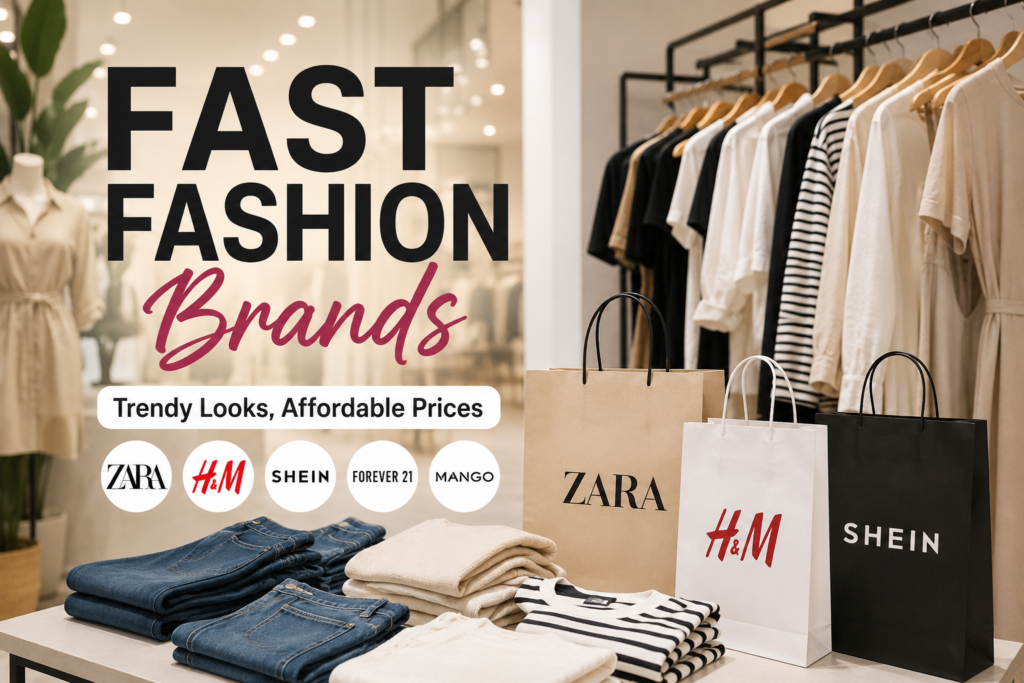

Discover the biggest fast fashion brands, how they work, their pros and cons, sustainability concerns, and smarter shopping tips in this complete guide.
Introduction
Fashion changes faster than ever. One week a style dominates social media, and the next week a completely different trend takes its place. Behind this rapid cycle are fast fashion brands that design, manufacture, and sell affordable clothing at remarkable speed.
Millions of people choose fast fashion because it offers trendy clothing at prices that fit almost every budget. At the same time, these brands receive criticism for environmental impact, labor practices, and encouraging excessive consumption.
If you’re wondering whether fast fashion is right for you, understanding how these companies operate can help you make smarter purchasing decisions. This guide explains what fast fashion brands are, how they became so popular, their advantages and disadvantages, and how you can shop more responsibly without giving up your personal style.
What Are Fast Fashion Brands?
Fast fashion brands are clothing companies that quickly transform the latest runway looks, celebrity outfits, and social media trends into affordable products available in stores and online.
Traditional fashion companies often release only a few collections each year. Fast fashion brands, however, may launch hundreds or even thousands of new products every week. Their goal is simple: keep customers returning frequently because there is always something new to buy.
Modern supply chains, digital design tools, and global manufacturing make this rapid production possible. Instead of waiting months for seasonal collections, consumers can often purchase trendy items within weeks of seeing them become popular.
How Fast Fashion Changed the Clothing Industry
Years ago, fashion followed predictable seasonal schedules. Designers introduced spring, summer, autumn, and winter collections well in advance.
Today, fast fashion brands have shortened this timeline dramatically.
Instead of four collections per year, many companies introduce new styles almost every day. Social media platforms accelerate trends, while online shopping allows consumers to purchase the latest styles instantly.
This constant product refresh has completely changed shopping habits. Many customers now view clothing as something temporary rather than a long-term investment.
Why Fast Fashion Brands Became So Popular
Several factors explain why fast fashion dominates today’s clothing market.
Affordable pricing is perhaps the biggest reason. People can experiment with different styles without spending a large amount of money.
The wide variety also appeals to shoppers. Whether someone prefers casual streetwear, business clothing, athletic fashion, or evening outfits, there are countless options available throughout the year.
Convenience is another major advantage. Online stores, mobile apps, and fast shipping make purchasing clothing easier than ever.
Social media also plays an enormous role. Influencers regularly showcase new outfits, encouraging followers to try similar looks while trends remain popular.
Popular Fast Fashion Brands Around the World
Many companies have become global leaders in fast fashion by combining affordability with constantly changing collections.
Zara is often credited with pioneering modern fast fashion. The company is known for rapidly responding to fashion trends while maintaining stylish collections that appeal to a broad audience.
H&M offers affordable clothing for men, women, and children while expanding its sustainable product lines in recent years.
Forever 21 built its reputation by offering fashionable clothing targeted toward younger shoppers looking for trendy styles at budget-friendly prices.
Mango focuses on modern European-inspired fashion with an emphasis on clean designs and contemporary trends.
Bershka attracts younger consumers with bold streetwear and fashion influenced by music, youth culture, and social media.
Pull&Bear combines casual clothing with relaxed, everyday styles suitable for students and young professionals.
Stradivarius emphasizes feminine fashion while regularly updating collections based on seasonal trends.
Fashion Nova became extremely popular through influencer marketing and celebrity partnerships, especially across Instagram and TikTok.
PrettyLittleThing specializes in affordable partywear, casual clothing, and influencer-inspired fashion.
SHEIN has transformed online fashion retail by releasing thousands of new products daily while serving customers in countries around the world.
Each brand follows its own strategy, but all share one defining characteristic: producing fashionable clothing quickly and selling it at relatively low prices.
How Fast Fashion Brands Produce Clothing So Quickly
Speed is the foundation of fast fashion.
Companies continuously monitor fashion shows, celebrity appearances, street style, and social media trends. Designers quickly create similar concepts adapted for mass production.
Digital design software allows product development to happen much faster than in previous decades.
Manufacturing partners often operate around the world, enabling companies to produce clothing efficiently and reduce costs.
Advanced logistics systems move products from factories to warehouses and retail stores in a matter of weeks rather than months.
Data analytics also plays an important role. Brands closely monitor customer purchases and online searches to determine which products deserve additional production and which should be discontinued.
Advantages of Fast Fashion Brands
Fast fashion offers several benefits that explain its enormous popularity.
Affordable pricing allows more people to enjoy stylish clothing regardless of income level.
Consumers have access to countless styles throughout the year, making it easier to express personal fashion preferences.
Frequent product updates keep shopping exciting since new arrivals appear almost constantly.
Seasonal trends become accessible to everyone instead of remaining exclusive to luxury fashion buyers.
Fast fashion also supports experimentation. Someone interested in trying a new color, silhouette, or style can do so without making a major financial commitment.
Students, young professionals, and growing families often appreciate the ability to purchase fashionable clothing while staying within budget.
The Environmental Impact of Fast Fashion
Despite its popularity, fast fashion raises serious environmental concerns.
Producing millions of garments requires enormous amounts of water, energy, and raw materials.
Cotton farming consumes significant water resources, while synthetic fabrics such as polyester rely on fossil fuels.
Manufacturing processes can generate pollution if wastewater and chemicals are not properly managed.
Transportation also contributes to carbon emissions as clothing moves through complex international supply chains.
Perhaps the biggest concern is textile waste. Many consumers wear garments only a few times before discarding them, resulting in millions of tons of clothing entering landfills every year.
Because trends change so rapidly, perfectly usable clothing often becomes unwanted long before it wears out.
Labor and Ethical Concerns
Another important discussion surrounding fast fashion involves working conditions.
Many brands rely on factories located in countries with lower production costs. While numerous manufacturers follow international labor standards, concerns continue regarding wages, workplace safety, excessive overtime, and employee rights in some parts of the global supply chain.
Consumers increasingly expect fashion companies to improve transparency regarding where clothing is produced and under what conditions.
As a result, many major brands now publish supplier information, sustainability reports, and ethical sourcing commitments.
Is Fast Fashion Always Low Quality?
A common misconception is that every fast fashion product is poor quality.
In reality, quality varies considerably.
Some garments remain in excellent condition after years of use, while others may lose shape, fade, or wear out after only a few washes.
Fabric choice, construction methods, stitching quality, and garment care all influence durability.
Reading product descriptions carefully, checking fabric composition, and following washing instructions can significantly extend the lifespan of clothing.
Consumers should evaluate each item individually rather than assuming every product from a particular brand has identical quality.
How Social Media Fuels Fast Fashion
Social media has transformed the fashion industry.
Platforms like Instagram, TikTok, Pinterest, and YouTube introduce new clothing trends almost daily.
Influencers regularly showcase outfit ideas, styling tips, and shopping hauls that inspire millions of viewers.
As trends spread globally within hours, fast fashion brands respond by creating similar products at remarkable speed.
This continuous cycle encourages consumers to refresh their wardrobes more frequently than previous generations.
At the same time, social media has also increased awareness about sustainability, ethical manufacturing, and mindful shopping.
Fast Fashion vs. Slow Fashion
Understanding the difference between fast fashion and slow fashion helps shoppers make informed choices.
Fast fashion prioritizes affordability, rapid production, and constantly changing collections.
Slow fashion focuses on quality craftsmanship, durable materials, ethical production, and timeless designs intended to last for many years.
Neither approach fits every shopper perfectly.
Some people combine both strategies by purchasing timeless wardrobe essentials from higher-quality brands while occasionally buying affordable trend pieces from fast fashion retailers.
Finding the right balance often depends on personal values, budget, and lifestyle.
Smart Ways to Shop Fast Fashion Responsibly
Buying from fast fashion brands does not automatically mean shopping irresponsibly.
Making thoughtful purchasing decisions can reduce unnecessary waste.
Choose clothing you genuinely expect to wear often instead of buying items simply because they are inexpensive.
Prioritize versatile pieces that match multiple outfits.
Pay attention to fabric quality and construction before making a purchase.
Follow proper washing and storage instructions to extend garment life.
Repair minor damage instead of replacing clothing immediately.
Donate, resell, or recycle unwanted garments whenever possible rather than throwing them away.
Building a smaller wardrobe filled with frequently worn items usually provides better value than purchasing large quantities of rarely used clothing.
What the Future Looks Like for Fast Fashion Brands
The fast fashion industry continues evolving.
Many companies are investing in recycled materials, organic cotton, lower-impact manufacturing methods, and improved supply chain transparency.
Artificial intelligence helps brands predict customer demand more accurately, reducing excess inventory.
Digital fashion design minimizes material waste during product development.
Some retailers have introduced clothing recycling programs, resale platforms, and repair services to support more sustainable consumption.
Consumers are also becoming more selective. Instead of focusing only on price, many now consider product quality, environmental impact, and ethical manufacturing when making purchasing decisions.
As awareness grows, successful fast fashion brands will likely continue balancing affordability with greater sustainability and transparency.
Common Myths About Fast Fashion Brands
Many misconceptions surround the fast fashion industry.
One myth suggests that only young people purchase fast fashion. In reality, customers of all ages shop these brands because they appreciate affordable prices and wide product selections.
Another misconception is that sustainability and fast fashion cannot exist together. While challenges remain, many companies are investing in recycled fabrics, cleaner production technologies, and improved supply chain accountability.
Some people also believe expensive clothing always lasts longer. Price often reflects branding and design, but durability depends largely on fabric quality, construction, and proper care.
Understanding these realities helps consumers make better-informed decisions rather than relying solely on assumptions.
How to Build a Better Wardrobe Without Overspending
Creating a stylish wardrobe does not require buying every new trend.
Focus on clothing that fits well, complements your lifestyle, and works across multiple seasons.
Choose neutral basics that can be mixed with a few trendy statement pieces.
Before making any purchase, ask yourself whether you can create several outfits using the item.
Buying fewer but more useful garments often saves money over time while reducing unnecessary waste.
This balanced approach allows you to enjoy fashion without feeling pressured to constantly replace your wardrobe.
Conclusion
Fast fashion brands have transformed the global clothing industry by making trendy fashion affordable and accessible to millions of people. Their ability to respond quickly to changing styles has reshaped how consumers shop, dress, and express themselves.
However, this convenience also comes with important environmental and ethical challenges. Understanding how fast fashion works allows you to make purchasing decisions that align with both your budget and your values.
Instead of avoiding fast fashion entirely or buying impulsively, aim for thoughtful shopping habits. Choosing quality pieces, wearing them longer, caring for them properly, and donating or recycling unwanted clothing can make a meaningful difference.
Fashion should help you feel confident while supporting choices that are better for both your wallet and the world.
Frequently Asked Questions
What are fast fashion brands?
Fast fashion brands are clothing companies that quickly produce affordable versions of the latest fashion trends and release new collections throughout the year.
Why are fast fashion brands so cheap?
They reduce costs through large-scale production, efficient supply chains, lower manufacturing expenses, and high sales volumes.
Which are the most popular fast fashion brands?
Some of the best-known fast fashion brands include Zara, H&M, SHEIN, Forever 21, Mango, Bershka, Pull&Bear, Stradivarius, Fashion Nova, and PrettyLittleThing.
Is fast fashion bad for the environment?
Fast fashion can contribute to environmental issues through high resource consumption, textile waste, pollution, and carbon emissions. However, many brands are working toward more sustainable practices.
How can I shop fast fashion more responsibly?
Purchase only what you need, choose higher-quality items, wear clothing for longer, care for garments properly, repair damaged pieces, and donate or recycle clothes instead of discarding them.
Is fast fashion the same as affordable fashion?
Not always. Affordable fashion simply refers to lower-priced clothing, while fast fashion specifically involves producing trendy garments rapidly and releasing new collections frequently.
Are fast fashion clothes good quality?
Quality varies between brands and individual products. Some garments last for years with proper care, while others may wear out more quickly depending on materials and construction.