
Discover 9 flattering Curve-Friendly Coats in the UK designed for comfort, elegance, and everyday style. Explore trendy coat options with perfect fits, cosy fabrics, and fashionable designs that help create a confident seasonal wardrobe.
Introduction
A good coat should do more than look attractive on a hanger. It should close without pulling, leave room for movement, feel comfortable over winter layers and suit the weather you face. Yet outerwear can be difficult to buy when standard sizing does not reflect your proportions. Well-designed Curve-Friendly Coats solve many of these common fitting problems while helping you feel comfortable, confident and ready for changing weather
Curve friendly coats address this problem through better shaping, practical stretch and inclusive sizing. The best curve friendly coats also provide enough space across the bust, waist, hips and upper arms without looking bulky. Whether you need a wool coat, warm puffer or waterproof parka, this guide explains how to judge fit, fabric, length and quality.
What Makes a Coat Curve Friendly?
The phrase Curve-Friendly Coats should mean more than just a larger version of a straight-size coat. Well-designed Curve-Friendly Coats consider how the bust, waist, hips, upper arms and shoulders work together. They provide extra room where needed while keeping the overall shape balanced. The best Curve-Friendly Coats are created with thoughtful tailoring that supports different body proportions without making the design look oversized.
Useful details include princess seams, adjustable waists, two-way zips, stretch panels and generous armholes. These features make Curve-Friendly Coats more comfortable by reducing pulling across the chest, hips and sleeves. High-quality Curve-Friendly Coats use these practical design details to improve movement, flexibility and everyday wear.
Comfort is the most reliable test when choosing Curve-Friendly Coats. A good Curve-Friendly Winter Coat should allow you to sit, drive, lift your arms and carry a bag without strain. It should also close fully over the clothes you normally wear. A coat that only looks good while open is not serving its main purpose, which is why properly designed Curve-Friendly Coats focus on both style and functionality.
Start With Measurements, Not the Size Label
Clothing sizes vary between brands, which is why choosing the right fit for Curve-Friendly Coats requires more attention than simply checking the size label. One retailer’s size 18 may fit like another retailer’s size 20 or 22. This is why the size chart matters more than the number on the label. When buying Curve-Friendly Coats, accurate sizing is especially important because the fit must work across the bust, waist, hips and arms. Research on fashion e-commerce also identifies size and fit as a major cause of clothing returns, which shows why accurate measurements matter when shopping for Curve-Friendly Coats online.
Measure your bust, natural waist and the widest point of your hips before selecting Curve-Friendly Coats. Keep the tape level and close without pulling. Compare your figures with garment measurements whenever the retailer provides them, as these show the coat’s built-in room. This step helps you choose Curve-Friendly Coats that provide enough space for movement and winter layers without feeling too loose or uncomfortable.
Check the Bust, Shoulders and Arms
The shoulder seam should sit close to the edge of your shoulder unless the coat has an intentional dropped-shoulder design. When trying Curve-Friendly Coats, check that the shoulder line sits correctly and does not make the sleeves look too long or bulky. The right fit in Curve-Friendly Coats helps maintain a balanced shape while allowing comfortable movement. If the seam sits too high, movement can become restricted and the coat may feel uncomfortable during daily activities.
Fasten every button or zip and check the chest from the front and side when testing Curve-Friendly Coats. Horizontal pulling, stretched buttonholes or a zip that bends sharply are signs of poor fit. Sizing up may help, but a different cut may work better if the larger size becomes too loose at the shoulders. Well-designed Curve-Friendly Coats should provide enough room without losing their structure.
Upper-arm space is just as important when choosing Curve-Friendly Coats. Try reaching forward as though holding a steering wheel, then raise your arms. The coat should move with you without digging into the arms, shoulders or upper back. Comfortable Curve-Friendly Coats allow freedom of movement while keeping a stylish and flattering appearance.
Allow Room for Real Layers
Try the coat with the clothes you expect to wear beneath it. A thin top gives a false idea of winter fit if you normally wear knitwear, hoodies or office layers.
Extra room does not mean the coat must hang without shape. Adjustable belts, internal drawcords and shaped side panels can provide layering space while helping you control the silhouette.
Best Curve-Friendly Coats Styles for Every Body Shape
There is no single style for every curvy body. Your routine, climate and taste matter more than fixed fashion rules. Choose a coat that supports movement and works with your wardrobe.
Belted Wrap Coats
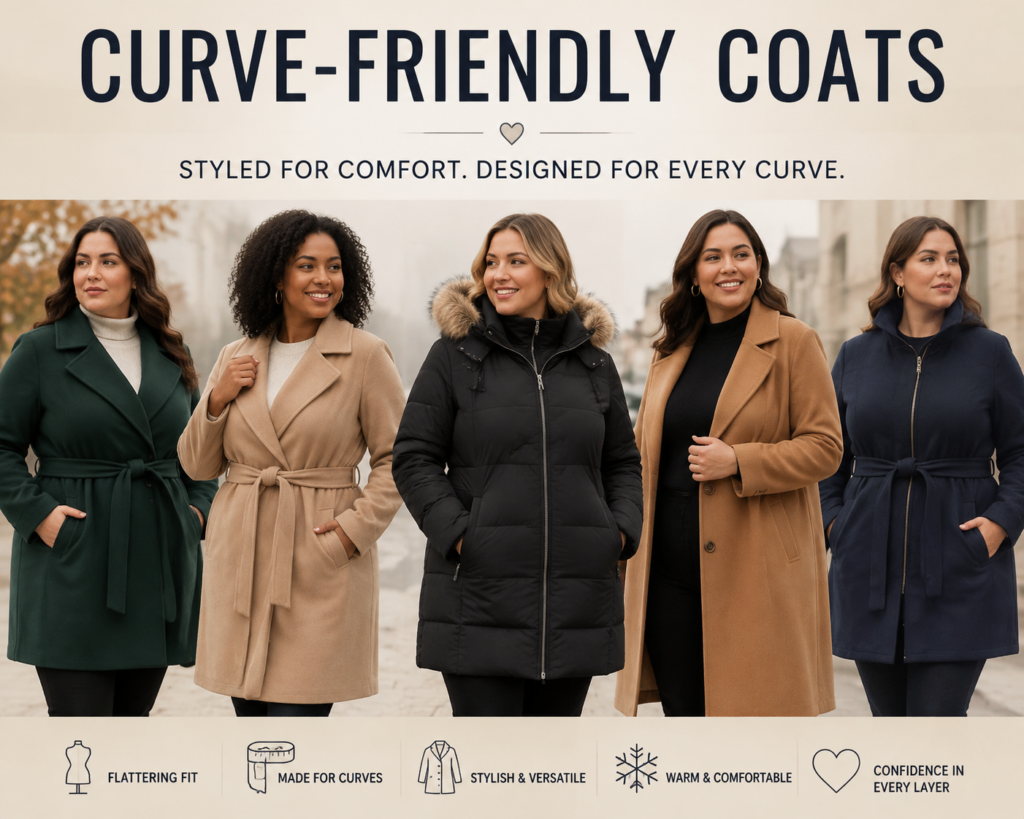
A belted wrap coat offers flexible adjustment at the waist and chest. This is useful when your bust, waist and hips fall into different size ranges. You can loosen the belt over thick layers or tie it more closely over a dress.
Look for secure internal fastening. A hidden button or inner tie can stop the front from opening in windy weather. A wider belt often lies more smoothly than a very thin one.
Single-Breasted Wool Coats
Single-breasted coats create a clean front with less fabric overlap than double-breasted designs. They are easy to wear for work, events and everyday outfits. A style with princess seams can add shape through the bust and waist without feeling restrictive.
A mid-thigh coat works well for driving and regular walking, while knee-length or calf-length versions offer more coverage. Check that the back vent allows a full step.
Plus Size Puffer Coats
A puffer is practical for cold commutes, school runs and outdoor activities. The best plus size puffer coats balance insulation with movement. Flexible cuffs, side panels and two-way zips can improve comfort, especially in long styles.
Do not judge warmth by thickness alone. Insulation, shell fabric, wind protection and length all affect performance. Down usually provides strong warmth for its weight and packs down well. Synthetic insulation can keep providing warmth when damp and often dries faster.
Parkas and Waterproof Coats
A parka is useful when you need weather protection, pockets and reliable coverage. Many curve friendly coats in parka styles include an adjustable hood, protected zips, storm flaps and a hem that covers the upper thighs. An internal waist drawcord allows you to change the fit without adding an external belt.
Water-resistant and waterproof are not the same. A water-resistant coat may cope with a brief shower, while a waterproof design uses stronger protective construction. When comparing curve friendly coats, check the product description carefully to understand the level of rain and wind protection provided.
Trench Coats
A curve friendly trench coat works well in mild or wet weather. Traditional details can add character, but they should not restrict the chest or add uncomfortable weight.
For an easier fit, consider a soft trench with fluid fabric and a removable belt. For more structure, choose shaping through the back and hips rather than a straight cut.
How to Choose the Right Coat Length
Coat length affects warmth, movement and how the garment works with your clothes. When comparing curve friendly coats, choose a length that suits your daily routine, climate and preferred outfits. It should be a practical choice, not a rule about what a curvy person is allowed to wear.
Cropped and hip-length coats are easy to move in and suit mild days. Mid-thigh styles offer more warmth without feeling heavy. Knee-length coats work well with office clothing and dresses. Longline curve friendly coats protect more of the body from wind and can create a clean, continuous look.
Your height affects proportion but does not limit your options. Petite shoppers may benefit from shorter sleeves, correctly raised pockets and a well-positioned waist. Taller shoppers should check sleeve length, belt position and back-vent placement. The goal is for every design feature to sit where it was intended.
Choose Fabric for Your Weather
Choose fabric for your temperature, rain, wind and care needs.
Wool and Wool Blends
Wool is a strong choice for smart winter outerwear because it can provide warmth while remaining breathable. Many curve friendly coats use wool or wool-blend fabrics to create a polished shape without feeling too heavy. Wool fibres can absorb moisture vapour and allow it to evaporate, helping the fabric feel less clammy.
Pure wool can cost more and may need specialist care. Wool blends are often lighter, easier to maintain and more affordable. When comparing curve friendly coats, check the fibre percentage before buying so you understand the coat’s warmth, softness and care requirements.
Down and Synthetic Fill
Down coats are often light, warm and easy to compress. They can work well in cold, dry weather and for travel. Synthetic insulation is generally more useful in damp conditions and dries faster, though it may be heavier for the same level of warmth.
Check how the fill is distributed. Uneven quilting or thin sleeves may create cold areas. A high collar, adjustable cuffs and closeable hem can improve warmth by reducing cold air movement.
Waterproof Fabrics
For frequent rain, choose curve friendly coats designed for wet conditions rather than relying on a decorative shower-resistant finish. Look for taped seams, a protective hood and breathable construction. A two-way zip can also improve comfort when sitting, driving or climbing stairs.
Technical fabrics used in curve friendly coats need correct care to maintain their performance. Dirt and detergent residue can affect water repellency, so always follow the care label. Some manufacturers advise regular cleaning and gentle heat to restore the outer water-repellent finish.
Design Details That Improve Comfort
A few small features can make a major difference. Two-way zips are especially useful on long coats because they allow the lower part to open while the chest stays covered. This gives more room when sitting, walking quickly or getting into a car.
Pockets should be easy to reach and large enough for daily items. High pockets can feel awkward, while very low pockets may pull the coat out of shape. Angled pockets often create a smoother front, while patch pockets offer useful storage.
Sleeves also deserve attention. Elastic cuffs block cold air but should not feel tight. Adjustable tabs give more control. Raglan sleeves can increase shoulder movement, while set-in sleeves create a sharper tailored shape.
A smooth lining helps the coat slide over knitwear and prevents sleeves from catching. Stretch lining can improve movement in fitted coats. Check that the lining does not pull across the back or hang below the hem.
How to Buy Curve Friendly Coats Online
Online shopping becomes easier when you compare evidence rather than relying on the model photo. Start with the size chart, then check garment measurements, fabric composition, stretch details and the model’s height and worn size.
Read reviews for repeated fit comments. One review may reflect personal preference, but several comments about tight arms, short sleeves or limited bust room provide useful evidence. Research has also found that customer review data can improve online size and fit predictions.
Study front, side and back images for waist placement, vent length and fabric drape. Product videos can also reveal movement.
Read the returns policy before ordering. A suitable return window gives you time to test the coat over different layers and in natural light. Keep the tags attached until you have checked the closure, hood, pockets, sleeves and sitting comfort.
Styling Curve Friendly Coats With Confidence
A coat does not need to make your body look smaller to be successful. Its purpose is to keep you comfortable, express your style and complete your outfit. Choose colours, textures and shapes because you enjoy them, not because of restrictive body-shape rules.
Neutral shades are easy to repeat, while bright colours, checks and textures can make the coat the main feature. A tailored coat can add structure to denim, while a trench can sharpen a simple outfit.
The strongest outfit is usually the one that matches the coat to the day. A warm puffer may be the best choice for a long outdoor journey, while a wool coat may suit an office or event. Practicality and style can work together.
Common Buying Mistakes
The most common mistake is choosing appearance over movement. Always test the coat while it is closed. Sit down, cross your arms, reach forward and use the pockets. If the fabric strains or the coat shifts sharply, the fit is not right.
Another mistake is automatically sizing up without checking the cut. A larger size may solve tightness at the hips but create loose shoulders and long sleeves. An A-line coat, wrap style or design with side stretch may fit better.
Do not overlook buttons, zips and seams. Heavy outerwear puts pressure on hardware, so closures should feel secure and operate smoothly. Choose a coat that works with the layers, shoes and activities you have now.
How to Care for Your Coat
Begin with the care label. Wool coats may need dry cleaning, gentle hand washing or careful machine care depending on their construction. Woolmark advises airing woven wool garments, using a suitable hanger and allowing the fibres time to recover between wears.
Brush away dirt and repair loose buttons early. Clean the coat before seasonal storage.
Store structured coats on strong, shaped hangers with enough space around them. Avoid leaving puffer coats compressed for long periods because the insulation needs room to maintain its loft.
Conclusion
Curve friendly coats should combine comfort, weather protection and personal style. The right coat closes properly, moves with your body, fits over real layers and suits the conditions in which you will wear it. Focus on measurements, sleeve room, garment shape, fabric performance and construction instead of trusting the size label alone.
Take time to compare styles and test movement before deciding. A well-chosen coat can become one of the hardest-working pieces in your wardrobe, carrying you through workdays, weekends and changing weather. Measure yourself, review the clothes you already wear and start searching for a coat designed to fit your life as well as your curves.
Frequently Asked Questions
What Coat Style Is Best for a Curvy Figure?
The best style fits your shoulders, bust and hips while allowing easy movement. Belted wrap coats, shaped single-breasted coats, A-line parkas and two-way zip puffers are flexible options.
Personal preference matters more than a fixed body-shape rule. Try several lengths and cuts, then choose the coat that feels secure and comfortable.
Should I Size Up When Buying a Winter Coat?
You may need room for thick layers, but automatically sizing up is not always the best answer. Compare your measurements with the brand’s chart and check garment measurements when available.
Try the coat over your usual winter jumper. It should close without pulling while the shoulders and sleeves remain in the right position.
Are Long Coats Suitable for Plus Size Women?
Yes. Long coats can provide excellent warmth and create a polished outfit. The key points are correct sleeve length, comfortable hip room and a vent or two-way zip that supports movement.
Choose the length you enjoy wearing. Petite and tall shoppers can both wear long coats when the proportions fit correctly.
What Is the Warmest Type of Coat?
Insulated parkas and puffers are often the warmest choices, but performance depends on the fill, shell, wind protection, length and construction. Down offers high warmth for its weight, while synthetic insulation is useful in damp weather.
A fitted hood, high collar, secure cuffs and covered zip can also reduce heat loss.
How Should a Plus Size Coat Fit?
The coat should sit smoothly across the shoulders and close without stretched buttons, sharp creases or a strained zip. You should be able to reach forward, sit and raise your arms comfortably.
There should be enough room for normal layers, but the coat should not feel excessively loose unless it is designed to be oversized.
How Do I Find a Flattering Coat Online?
Use current body measurements, study the size chart and check garment measurements. Read reviews for repeated comments about the bust, hips, sleeves and length.
Look at side and back images, review the fabric details and confirm the returns policy before ordering. A flattering coat is one that fits properly and makes you feel comfortable.be both stylish and comfortable, making them suitable for everyday fashion.