
Discover 20 Black Owned Streetwear Brands known for bold designs, fresh street style, and strong cultural influence.
Introduction
Streetwear is more than just clothing. It is a voice, a culture, and a movement that reflects identity and creativity. Over the last decade, black owned streetwear brands have transformed global fashion by bringing authentic stories, bold designs, and cultural pride into everyday style. These brands are not only influencing what people wear but also how fashion connects to history, community, and self-expression.
From New York to London and Los Angeles, black designers have shaped streetwear into something powerful and meaningful. Their work blends music, art, and social commentary into wearable pieces that speak louder than trends. Today, these brands are leading conversations in luxury fashion, sustainability, and youth culture.
In this guide, we explore the rise of black owned streetwear brands, their cultural importance, standout names, styling ideas, and what the future holds for this growing movement.
The Rise of Black Owned Streetwear Brands
Streetwear originally grew from skateboarding, hip-hop, and urban youth culture. Black communities played a major role in shaping its identity, especially through music and street art. Over time, this underground style evolved into a global fashion force.
Black designers began creating brands that represented their own experiences rather than copying mainstream fashion. This shift gave birth to a new wave of creativity. These brands focused on storytelling, identity, and authenticity instead of mass production trends.
Designers like Telfar Clemens and Kerby Jean-Raymond showed the world that streetwear could be both culturally meaningful and high fashion. Their success proved that independent voices could stand alongside major luxury houses.
Today, black owned streetwear brands are no longer niche. They are essential players in the global fashion industry, influencing runways, celebrities, and everyday street style.
Cultural Power and Identity in Streetwear
Black owned streetwear brands carry deep cultural meaning. They are not just fashion labels but expressions of lived experience. Many designs reflect themes like resilience, identity, equality, and community pride.
Fashion has always been tied to storytelling, and these brands use clothing as a canvas. Graphic prints often reference history, music, or social movements. Oversized silhouettes, bold typography, and experimental cuts are used to challenge traditional fashion norms.
One strong example is how streetwear connects to hip-hop culture. Rappers and artists often wear these brands in music videos and public appearances, helping spread their influence globally. This connection between fashion and music strengthens cultural identity and visibility.
The impact goes beyond clothing. These brands empower young designers and creatives, showing that fashion can be a tool for representation and change.
Leading Black Owned Streetwear Brands Shaping the Industry
Several influential black owned streetwear brands have helped define modern fashion. Each one brings a unique voice and vision.
Telfar is one of the most recognizable names in global streetwear. Known for its slogan “Not for you, for everyone,” the brand focuses on accessibility and inclusivity while maintaining strong design identity. Its shopping bags became a cultural phenomenon, symbolizing affordable luxury and community pride.
Pyer Moss, founded by Kerby Jean-Raymond, is another powerful name. The brand blends fashion with activism, often addressing racial identity and social justice through runway shows and collections. Pyer Moss has redefined what luxury streetwear can represent.
Denim Tears, created by Tremaine Emory, explores African American history through denim and cotton-based storytelling. Each collection highlights historical narratives tied to identity and heritage.
Hood By Air, founded by Shayne Oliver, is known for pushing boundaries with avant-garde streetwear designs. It challenges gender norms and traditional silhouettes, making it a favorite in high fashion circles.
Billionaire Boys Club, co-created by Pharrell Williams, blends music, skate culture, and futuristic design. It has become a global streetwear staple with strong influence in youth culture.
Walker Wear, founded by April Walker, is one of the early pioneers of streetwear culture. It helped define urban fashion in the 1990s and continues to influence new designers today.
These brands prove that black creativity is central to streetwear’s global identity.
Why These Brands Matter in Modern Fashion
Black owned streetwear brands matter because they bring authenticity into an industry often driven by trends. They represent real stories, not manufactured concepts.
Many mainstream fashion houses now look to streetwear for inspiration, especially from black designers who understand the cultural roots of the style. This influence has changed how luxury fashion operates, making it more inclusive and diverse.
Another reason these brands matter is economic empowerment. They create opportunities for black entrepreneurs, designers, photographers, and artists. Every successful brand builds a pathway for others to follow.
Consumers also value authenticity more than ever. People want to wear clothing that represents meaning, not just logos. Black owned streetwear brands fulfill this demand by combining storytelling with strong design.
Streetwear Trends Driven by Black Designers
Modern streetwear trends are heavily influenced by black designers. Oversized fits, graphic-heavy designs, and bold branding are now global fashion standards.
Sustainability is also becoming a key focus. Many black owned brands are experimenting with eco-friendly fabrics and ethical production methods. This shift reflects a deeper awareness of environmental impact in fashion.
Another trend is the blending of luxury and streetwear. High-end collaborations between designers and luxury fashion houses are now common. Black designers have played a key role in breaking down the barrier between street style and high fashion.
Digital fashion and online culture also shape trends. Social media platforms have allowed independent black owned brands to reach global audiences without traditional gatekeepers.
How to Style Black Owned Streetwear Brands
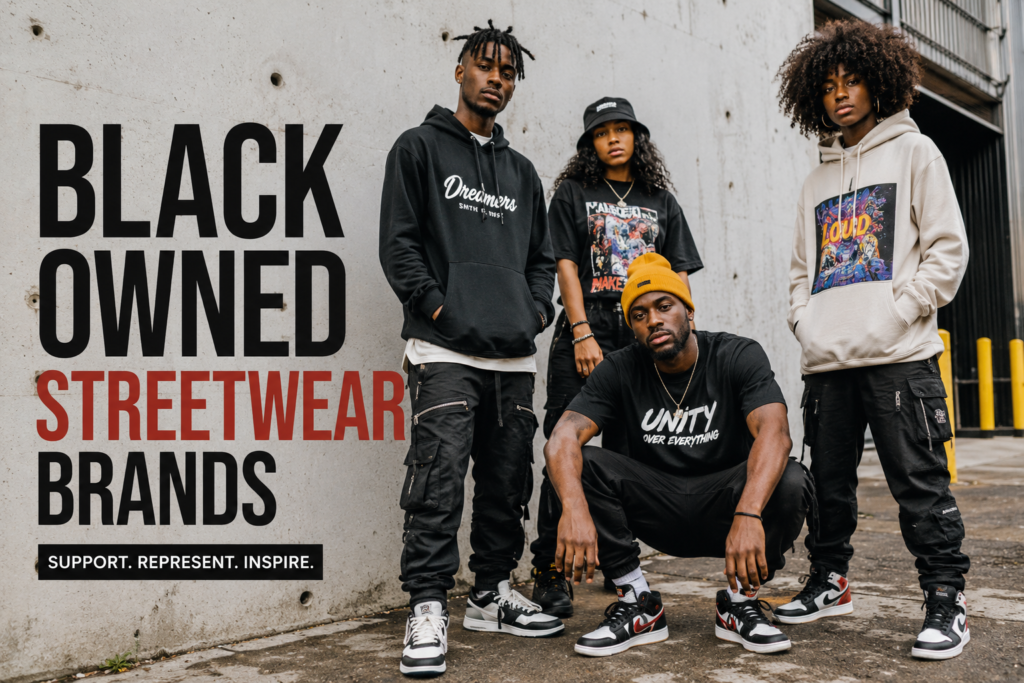
Streetwear styling is about confidence and individuality. Black owned streetwear brands often feature bold designs, so outfits are built around expression rather than perfection.
A simple oversized hoodie paired with relaxed jeans can create a strong streetwear look. Graphic tees from these brands can be styled with layered jackets or statement sneakers for a modern urban outfit.
Monochrome outfits also work well, especially when the focus is on texture and silhouette. Many streetwear pieces are designed to stand out on their own, so minimal accessories often complete the look.
Footwear plays a major role in streetwear styling. Sneakers are usually the foundation of any outfit, and limited-edition collaborations often enhance the overall aesthetic.
The key is balance. Streetwear is not about following strict rules but about expressing personality through clothing.
The Business Growth of Black Owned Streetwear
The business side of black owned streetwear brands has grown significantly. Many of these brands started independently with limited resources and small audiences. Today, they are featured in major fashion weeks and luxury retail stores.
E-commerce has played a major role in this growth. Online platforms allow designers to sell directly to consumers without relying on traditional retail systems. This has given black entrepreneurs more control over branding and profits.
Collaborations with celebrities and influencers have also helped expand reach. When artists wear these brands, it creates instant global visibility.
Despite challenges like funding and market competition, many black owned streetwear brands continue to grow through innovation, community support, and strong brand identity.
The Future of Black Owned Streetwear Brands
The future of black owned streetwear brands looks strong and influential. As fashion continues to evolve, these brands are expected to play an even bigger role in shaping global trends.
Technology will likely become more integrated into fashion, with digital clothing, virtual fashion shows, and AI-driven design tools becoming more common. Black designers are already experimenting with these innovations.
There is also growing demand for ethical fashion. Consumers are more aware of where their clothes come from and how they are made. This gives independent black owned brands an advantage because many already prioritize authenticity and transparency.
Global expansion is another key direction. As streetwear continues to spread across Asia, Europe, and Africa, black designers will have more opportunities to influence international markets.
Conclusion
Black owned streetwear brands have reshaped modern fashion in powerful ways. They represent creativity, resilience, and cultural pride while continuing to push boundaries in design and storytelling.
From pioneering labels to emerging designers, these brands show that fashion is not just about clothing but about identity and expression. Supporting them means supporting innovation, culture, and diversity in the fashion industry.
If you want to explore meaningful fashion choices, start with black owned streetwear brands that align with your style and values. The future of streetwear is inclusive, bold, and deeply rooted in culture—and these brands are leading the way.
FAQs
What are black owned streetwear brands?
Black owned streetwear brands are fashion labels created and run by black designers. They focus on street-inspired fashion that reflects culture, identity, and creativity.
Why are black owned streetwear brands important?
They are important because they bring representation, cultural storytelling, and innovation into the fashion industry while empowering black entrepreneurs and creatives.
Which black owned streetwear brands are popular today?
Some well-known names include Telfar, Pyer Moss, Denim Tears, Hood By Air, Billionaire Boys Club, and Walker Wear.
How can I support black owned streetwear brands?
You can support them by purchasing directly from official websites, following their social media, and sharing their work with others.
Are black owned streetwear brands expensive?
Prices vary. Some brands focus on affordable fashion while others operate in the luxury segment, offering premium streetwear pieces.
What makes black owned streetwear different from other brands?
They stand out because they combine fashion with cultural identity, storytelling, and real-life experiences rather than only focusing on trends.