
15 Fashion Mistakes: What Not to Wear to a Black Tie Event – discover common style errors to avoid and learn how to dress perfectly for a black tie occasion with elegance and confidence.
What Not to Wear to a Black Tie Event
Black tie events are among the most elegant social occasions. Whether you’re attending a wedding, gala, charity fundraiser, awards ceremony, or formal dinner, dressing appropriately shows respect for the host and helps you feel confident throughout the evening.
Yet many guests struggle with understanding the black tie dress code. Some assume it simply means dressing nicely, while others go too casual or choose outfits that miss the mark entirely. Even expensive clothing can look out of place if it does not match the expectations of a black tie gathering.
Knowing what not to wear to a black tie event is just as important as knowing what to wear. When people search for what not to wear to a black tie event, they are often trying to avoid common fashion mistakes that can lead to embarrassment or feeling out of place.
Many black tie fashion mistakes happen because guests misunderstand the level of formality required. Wearing casual attire, inappropriate accessories, or poorly fitted clothing can instantly make an outfit look unsuitable for the occasion.
Avoiding these fashion mistakes can save you from embarrassment and ensure you fit seamlessly into the sophisticated atmosphere.
This guide explains the biggest black tie fashion mistakes and offers practical advice to help you make the right impression.
Understanding the Black Tie Dress Code
Traditionally, black tie attire calls for formal evening wear. Men are expected to wear a tuxedo with a black bow tie, while women typically choose floor-length gowns, elegant evening dresses, or sophisticated formal ensembles.
Black tie events became popular in the late nineteenth century as a slightly less formal alternative to white tie occasions. Today, they remain a symbol of elegance and refinement.
Understanding these expectations is essential when learning what not to wear to a black tie event, as even small style mistakes can make an outfit appear inappropriate. Many of the most common fashion mistakes occur when guests underestimate the formality of the event or choose clothing that does not align with traditional black tie standards.
Because black tie is one of the strictest dress codes, casual clothing choices often stand out for the wrong reasons. Avoiding these fashion mistakes helps ensure that your outfit reflects the sophistication and elegance expected at a formal occasion.
Why Dress Code Matters at Black Tie Events
Dress codes create a sense of unity among guests. They establish the tone of an event and contribute to the overall experience.
Imagine attending a luxury gala where most guests wear formal evening attire. A guest arriving in jeans and sneakers would immediately feel out of place. The opposite is also true. Following the dress code allows everyone to enjoy the occasion without distractions, and this is exactly where understanding what not to wear to a black tie event becomes important.
Fashion experts consistently emphasize that proper attire demonstrates professionalism, respect, and social awareness. For formal events, appearance plays a significant role in making positive first impressions, especially when considering what not to wear to a black tie event to avoid common style mistakes.
What Not to Wear to a Black Tie Event
Casual Jeans and Denim
Jeans are one of the most obvious items to avoid when considering what not to wear to a black tie event.
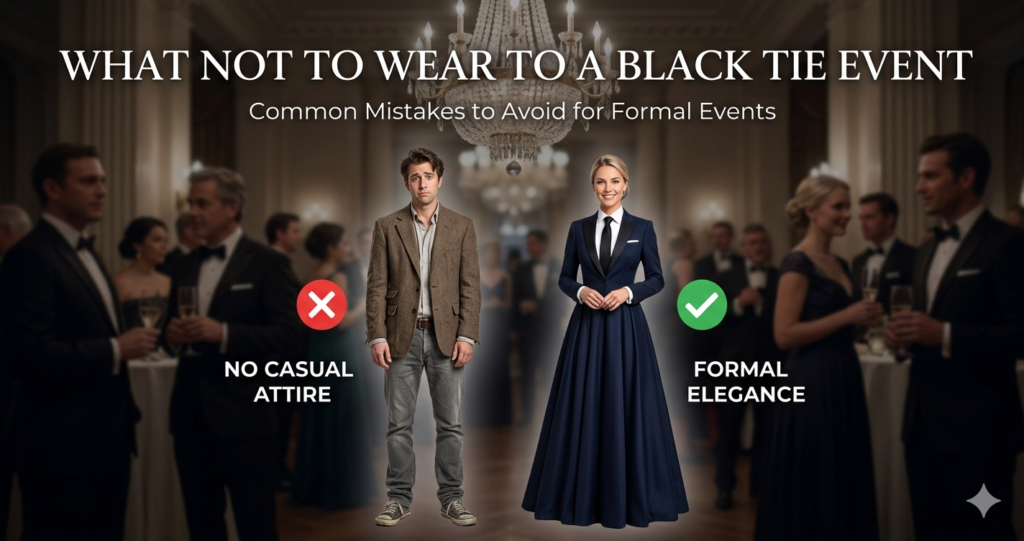
Even designer denim rarely meets black tie standards. Distressed jeans, skinny jeans, denim jackets, and other casual denim pieces create a relaxed appearance that clashes with formal surroundings. Wearing denim to a formal event is one of the most common fashion mistakes people make when they misunderstand the black tie dress code.
If you are tempted to dress up dark jeans with a blazer, remember that black tie requires a much higher level of sophistication, especially when thinking about what not to wear to a black tie event and how easily denim can break the formal dress code. Avoiding this type of fashion mistake helps ensure your outfit matches the elegance and formality expected at black tie occasions.
T-Shirts and Casual Tops
A simple T-shirt may be comfortable, but it has no place at a black tie event, especially when considering what not to wear to a black tie event.
Graphic tees, basic cotton shirts, tank tops, and casual knitwear appear too informal. Even expensive designer T-shirts fail to satisfy black tie expectations. Wearing these items is one of the most common fashion mistakes guests make when they underestimate the level of formality required.
Formal occasions require structured garments made from elegant fabrics that reflect the event’s upscale atmosphere, which is why understanding what not to wear to a black tie event helps you avoid these casual style mistakes. By avoiding such fashion mistakes, you can ensure your outfit looks polished, sophisticated, and appropriate for the occasion.
Sneakers and Athletic Shoes
Footwear can make or break an outfit, especially when considering what not to wear to a black tie event.
Athletic shoes, running sneakers, gym trainers, and casual canvas footwear should stay at home. These styles instantly reduce the formality of your appearance and are among the most noticeable fashion mistakes people make at formal events.
Men should opt for polished dress shoes or patent leather shoes, while women can choose elegant heels, dressy flats, or formal sandals depending on the event, all while keeping in mind what not to wear to a black tie event to maintain a refined and appropriate look. Avoiding these footwear fashion mistakes helps ensure your overall outfit reflects the sophistication and elegance expected at a black tie occasion.
Shorts of Any Kind
Shorts are never appropriate for black tie occasions.
Even tailored shorts lack the refinement required for formal evening events. Whether they are Bermuda shorts, linen shorts, or designer versions, they create a casual impression that conflicts with the dress code. Wearing shorts to a formal gathering is one of the most common fashion mistakes people make when they misunderstand black tie expectations.
Formal trousers and gowns remain the standard choice. Avoiding this type of fashion mistake helps maintain the elegance and sophistication that define black tie events and ensures your outfit aligns with the required level of formality.
Wrinkled or Ill-Fitting Clothing
One of the most overlooked mistakes is wearing clothing that does not fit properly.
A tuxedo that is too large or a gown that drags excessively on the floor can undermine an otherwise beautiful look. Poorly fitted clothing is one of the most common fashion mistakes at black tie events because it can make even elegant attire appear unpolished.
Wrinkles, poor tailoring, and visible wear can make expensive clothing appear cheap. Taking the time to ensure proper fit and pressing can dramatically improve your overall presentation. Avoiding these fashion mistakes helps create a refined, sophisticated appearance that aligns with the formal expectations of a black tie occasion.
Fashion Choices Women Should Avoid
Extremely Casual Dresses
Women often wonder whether a cocktail dress qualifies as black tie attire.
In many cases, shorter dresses may work if they are exceptionally elegant. However, casual summer dresses, sundresses, and beach-inspired styles are generally inappropriate. Choosing overly casual dresses for a formal event is one of the most frequent fashion mistakes women make when interpreting the black tie dress code.
Black tie occasions call for elevated fabrics such as silk, satin, velvet, chiffon, or crepe. Selecting refined materials and sophisticated designs helps avoid these fashion mistakes and ensures your outfit reflects the elegance and formality expected at a black tie event.
Overly Revealing Outfits
While formal events allow glamorous fashion choices, extremely revealing clothing can appear inappropriate.
Very high slits, excessively low necklines, and overly sheer designs may draw attention for the wrong reasons. Choosing outfits that are too revealing is one of the common fashion mistakes people make when trying to stand out at black tie events.
The goal is to achieve elegance rather than shock value. Avoiding these fashion mistakes helps create a polished and sophisticated appearance that aligns with the refined atmosphere of a formal occasion.
Everyday Handbags
Large tote bags and casual purses can disrupt a polished evening look.
Formal events are better suited to elegant clutches, evening bags, or small structured handbags.
Accessories should complement the sophistication of the event rather than appear purely functional.
Excessive Glitter During Conservative Events
Although sparkle is often welcome at black tie events, context matters.
A charity gala, corporate awards dinner, or formal fundraiser may call for understated elegance rather than head-to-toe sequins.
Consider the event type, venue, and guest expectations before selecting heavily embellished attire.
Fashion Choices Men Should Avoid
Regular Business Suits
Many men assume a dark business suit is acceptable for black tie.
While a dark suit may be suitable for formal business occasions, traditional black tie specifically requires a tuxedo.
A tuxedo’s satin details, formal construction, and elegant styling distinguish it from standard business attire.
Long Neckties Instead of Bow Ties
The classic black bow tie is a defining feature of black tie attire.
Wearing a regular necktie can make an outfit appear more business-oriented than formal.
Unless the invitation specifically mentions “black tie optional,” sticking with a bow tie is usually the safest choice.
Bright or Flashy Colors
Formal evening events typically favor classic, sophisticated color palettes.
Bright neon jackets, loud patterns, and excessively bold combinations can distract from the elegance of the occasion.
Timeless shades such as black, midnight blue, white, and subtle metallic accents tend to work best.
Casual Belts and Accessories
Large belt buckles, sporty watches, and casual accessories can weaken an otherwise polished look.
Formal accessories should be understated and refined.
Simplicity often communicates sophistication more effectively than flashy details.
Common Grooming Mistakes to Avoid
Neglecting Personal Grooming
Even the most expensive outfit cannot compensate for poor grooming.
Unkempt hair, wrinkled clothing, and neglected personal hygiene can significantly impact first impressions.
Preparing for a black tie event involves more than choosing the right outfit. Grooming should receive equal attention.
Wearing Too Much Fragrance
Strong fragrances can overwhelm people in crowded environments.
A subtle application is generally more appropriate for formal gatherings.
The goal is to create a pleasant impression rather than dominate the room.
Ignoring Dress Shoe Maintenance
Scuffed shoes can stand out more than many people realize.
Polished footwear contributes to a complete and refined appearance.
Before attending a black tie event, inspect shoes carefully and address any visible wear.
Accessories That Can Ruin a Black Tie Look
Oversized Jewelry
Jewelry should enhance an outfit rather than overpower it.
Massive statement pieces can distract from an otherwise elegant appearance.
Many style professionals recommend choosing one focal accessory instead of wearing multiple dramatic pieces simultaneously.
Casual Technology Accessories
Fitness trackers, brightly colored smartwatches, and bulky phone cases often clash with formal attire.
If possible, select accessories that blend seamlessly with your outfit.
Small details can have a surprisingly large impact on overall presentation.
Novelty Items
Novelty ties, humorous cufflinks, and playful accessories may be entertaining in casual settings.
However, black tie occasions generally favor timeless sophistication over comedic fashion statements.
Real-Life Examples of Black Tie Dress Code Mistakes
Consider a wedding guest who arrives wearing dark jeans, a blazer, and clean sneakers. While this outfit may appear stylish for a dinner date, it looks noticeably underdressed among guests wearing tuxedos and evening gowns.
Another common example involves choosing a casual floral sundress for a black tie reception. Despite being attractive, the dress may seem too relaxed compared with the formal attire worn by other attendees.
Similarly, a man who wears a business suit and standard necktie may discover that he appears less formal than guests dressed in traditional tuxedos.
These situations demonstrate why understanding black tie expectations matters.
How to Judge the Formality of an Event
Not every black tie event follows identical standards.
A luxury hotel gala may be more formal than a private family celebration. Likewise, a black tie wedding in a major city may differ slightly from one held in a countryside venue.
Review the invitation carefully. Consider the location, host, occasion, and event timing.
When uncertain, it is usually safer to dress slightly more formally rather than risk appearing underdressed.
What You Should Wear Instead
If you want to avoid mistakes, focus on timeless elegance.
Men should generally choose a well-fitted tuxedo, formal dress shoes, a black bow tie, and refined accessories.
Women should select an elegant evening gown, sophisticated formal dress, or an equally polished formal ensemble made from luxurious fabrics.
Quality tailoring, proper grooming, and thoughtful accessories help complete the look.
The best black tie outfits appear effortless while reflecting attention to detail.
The Importance of Confidence
Even when dressed perfectly, confidence remains essential.
Wearing appropriate attire allows you to focus on enjoying the event rather than worrying about your appearance.
When your clothing aligns with the dress code, you naturally feel more comfortable participating in conversations, networking, and celebrating special occasions.
Confidence and elegance often go hand in hand.
Conclusion
Understanding what not to wear to a black tie event can help you avoid common fashion mistakes and make a lasting positive impression. Casual clothing, denim, sneakers, shorts, overly revealing outfits, business suits, and poorly maintained accessories rarely belong at formal evening occasions.
Black tie events celebrate sophistication, tradition, and attention to detail. Choosing attire that respects the dress code ensures you feel confident and appropriately dressed for the occasion.
The next time you receive a black tie invitation, take a few extra moments to plan your outfit carefully. A thoughtful wardrobe choice can elevate your entire experience and help you enjoy the event with confidence and style.
Frequently Asked Questions
Can I wear a cocktail dress to a black tie event?
In some cases, an elegant cocktail dress may be acceptable, especially if it is made from luxurious fabric and styled formally. However, floor-length gowns are generally the safest choice.
Are black shoes required for a black tie event?
Black shoes are traditionally preferred, particularly for men wearing tuxedos. Women have more flexibility but should still choose formal footwear.
Can I wear a business suit if I do not own a tuxedo?
A tuxedo is the standard black tie option. If the invitation states “black tie optional,” a dark formal suit may be acceptable.
Are sneakers ever acceptable at a black tie event?
Generally, no. Sneakers are considered too casual for traditional black tie occasions.
What colors should I avoid at a black tie event?
Extremely bright neon shades and overly loud patterns may appear out of place. Classic and elegant colors usually work best.
Is a short dress appropriate for black tie?
A sophisticated short dress may sometimes be acceptable, but long evening gowns remain the most traditional option.
Can I wear a smartwatch to a black tie event?
A smartwatch is functional but may not complement formal attire. A classic dress watch is usually a more elegant choice.