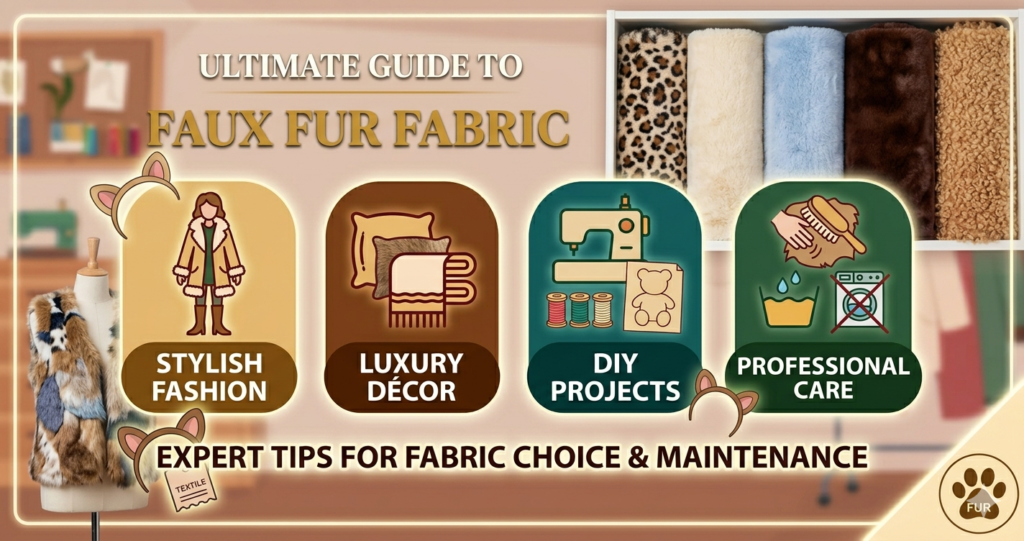

Explore 9 ultimate Fur Faux Fur Fabric ideas, attractive features, worst problems to avoid, and useful tips for fashion and home décor.
Introduction
Fur faux fur fabric has become a favorite choice for people who want warmth, softness, and luxury without using real animal fur. It looks rich, feels cozy, and works beautifully in fashion, home décor, costumes, crafts, and winter accessories.
Today, faux fur is not the stiff, fake-looking fabric many people remember from years ago. Modern versions can feel soft, dense, and realistic. You can find it in short pile, long shaggy styles, curly textures, animal prints, solid colors, and even premium designer finishes.
Whether you are sewing a coat, making a throw blanket, designing cushions, or planning a DIY project, understanding this fabric helps you choose better and avoid costly mistakes.
What Is Fur Faux Fur Fabric?
Fur faux fur fabric is a synthetic fabric designed to copy the look and feel of real fur. It is usually made from fibers like polyester, acrylic, or modacrylic. These fibers are woven or knitted into a backing, then brushed and trimmed to create a soft furry surface.
The “fur” part comes from the raised fibers on the surface. This raised texture is called pile. Some faux fur has a short, smooth pile, while others have a long, fluffy pile that looks bold and dramatic.
Good fur faux fur fabric can feel soft, warm, and flexible. Poor-quality faux fur may feel rough, flat, shiny, or plastic-like. That is why fabric quality matters so much before you buy.
Why Faux Fur Fabric Is So Popular
fur faux fur fabric is popular because it gives a luxury look without the high price or ethical concerns linked with real fur. Many fashion brands, home décor companies, and craft makers now use faux fur for stylish and practical designs.
It also offers more color and texture options than natural fur. You can buy white, black, brown, pink, cream, leopard print, tiger print, ombré, curly, shaggy, and teddy-style faux fur. This makes it useful for both classic and creative projects.
Another reason people love it is comfort. A faux fur throw can make a plain sofa feel expensive. A faux fur collar can make a simple coat look stylish. Even a small fur faux fur fabric pillow can add warmth to a room.
Common Types of Faux Fur Fabric
Short Pile Faux Fur
Short pile fur faux fur fabric has a low, smooth surface. It is easier to sew than long pile fur and works well for linings, collars, small crafts, bags, and soft toys.
This type is also easier to clean and control during cutting. If you are a beginner, short pile faux fur is usually a safer choice for your first project.
Long Pile Faux Fur
Long pile faux fur has longer fibers that create a fluffy, dramatic look. It is often used for coats, vests, blankets, costumes, and luxury cushions.
This fur faux fur fabric looks beautiful, but it needs careful cutting and sewing. If you cut it the wrong way, the fibers can shed badly or look uneven at the seams.
Shaggy Faux Fur
Shaggy fur faux fur fabric has a wild, textured surface. It gives a bold and cozy look. You often see it in rugs, statement jackets, festival outfits, and decorative pillows.
It can add strong personality to a design. However, it may not suit every project because the texture can look too heavy in small or formal designs.
Teddy Faux Fur
Teddy fur faux fur fabricis soft, curly, and plush. It looks like the fabric used in teddy bears. It is very popular for jackets, hoodies, blankets, baby items, and cozy winter pieces.
This style feels warm and casual. It is perfect when you want a soft, friendly, and relaxed look rather than a glamorous one.
Animal Print Faux Fur
Animal print faux fur copies patterns like leopard, zebra, tiger, cowhide, and cheetah. It is often used in fashion accessories, statement coats, costumes, and décor pieces.
A small amount of animal print fur faux fur fabric can make an outfit or room look bold. Too much can feel busy, so balance is important.
Best Uses for Fur Faux Fur Fabric
Fashion and Clothing
Fur faux fur fabric is widely used in jackets, coats, vests, cuffs, collars, scarves, hats, and earmuffs. It adds warmth and style at the same time.
For example, a simple black coat can look more elegant with a fur faux fur fabric collar. A cropped faux fur jacket can turn jeans and boots into a stylish winter outfit. A faux fur vest can add texture without feeling too heavy.
Home Décor
fur faux fur fabric is also popular in home styling. It works well for throw blankets, cushion covers, rugs, chair covers, bed runners, and decorative accents.
A cream fur faux fur fabric throw on a sofa can make a living room feel soft and expensive. A dark brown faux fur cushion can add warmth to a leather chair. A small faux fur rug beside a bed can make a bedroom feel cozy.
Crafts and DIY Projects
Crafters love fur faux fur fabric because it transforms simple projects into eye-catching pieces. It can be used for plush toys, holiday decorations, costume details, handbags, keychains, and photo props.
Even a small leftover piece can become something useful. You can make a faux fur trim for a stocking, a soft camera prop for baby photos, or a mini cushion for a pet bed.
Costumes and Cosplay
fur faux fur fabric is a favorite for costumes because it creates volume and character. It is used for animal costumes, fantasy outfits, monster suits, character tails, ears, and dramatic stage clothing.
Long pile faux fur works especially well for costumes because it adds strong visual impact. It also photographs well when brushed and shaped properly.
How to Choose High-Quality Faux Fur Fabric
Check the Softness
The first thing to check is touch. High-quality fur faux fur fabric should feel soft, smooth, and pleasant on the skin. If it feels scratchy, stiff, or too plastic-like, it may not be comfortable for clothing or blankets.
Run your hand across the fabric in both directions. Good faux fur usually has a clear nap direction. The fibers should move naturally and return to shape after brushing.
Look at the Density
Density means how full the fur looks. A dense faux fur fabric has enough fibers to cover the backing. If you can easily see the fabric base through the fur, the quality may be low.
Dense faux fur looks richer and warmer. It also works better for coats, cushions, and blankets because it gives a fuller appearance.
Check the Backing
The backing is the base that holds the fibers. It should feel strong but not too stiff. A flexible backing is better for clothing because it moves with the body.
For home décor, a slightly stronger backing can be useful. It helps cushions, rugs, and throws keep their shape.
Notice the Shine
Some shine is normal, especially in synthetic fibers. However, very shiny faux fur may look cheap. Natural-looking faux fur usually has a soft glow rather than a plastic glare.
If you want a luxury finish, choose fabric with a matte or low-sheen surface. It often looks more realistic and expensive.
Understanding Pile Length and Fabric Weight
Pile length is one of the most important details when buying faux fur. Short pile is easier to sew and gives a neat finish. Long pile looks dramatic but needs more care.
Fabric weight also matters. Textile weight is often measured in GSM, which means grams per square meter. A higher GSM usually means the fabric is heavier and fuller. For blankets and coats, heavier faux fur can feel warmer. For small crafts, lighter faux fur is easier to handle.
A beginner may find medium-weight faux fur easier to work with. It gives enough body without becoming too bulky under a sewing machine.
How to Sew Faux Fur Fabric
Sewing faux fur is not hard, but it does need patience. The biggest mistake is treating it like plain cotton or polyester fabric. Faux fur has direction, bulk, and loose fibers.
Always cut from the back side, not the fur side. Use small scissors or a craft knife to cut only the backing. This keeps the long fibers from being chopped off.
Before sewing, push the fur away from the seam line. This helps reduce trapped fibers. After sewing, gently pull out any fur caught in the seam using a pin or needle.
Use clips instead of pins when possible. Pins can get lost in thick fur. Clips hold the layers more clearly and make sewing safer.
Best Projects for Beginners
If you are new to faux fur, start with a simple project. A pillow cover, scarf, small throw, or collar trim is easier than a full coat.
A cushion cover is a great first project because it has simple seams. You can practice cutting, sewing, and brushing without worrying about complex shaping.
A faux fur scarf is another easy option. It looks stylish, uses less fabric, and does not require advanced fitting skills. Choose short or medium pile fur for better control.
Faux Fur Fabric for Winter Clothing
Faux fur works very well for winter fashion because it traps air between the fibers. This helps create warmth. However, the warmth depends on the backing, pile length, lining, and garment design.
A faux fur coat with lining will feel warmer than a thin unlined vest. A dense teddy faux fur jacket can be cozy for daily wear. A long pile faux fur coat can look glamorous for evenings and events.
For practical winter wear, choose a fabric that feels soft but not too heavy. Heavy faux fur can look beautiful, but it may feel tiring if worn for many hours.
Faux Fur Fabric for Luxury Home Styling
Faux fur can change the mood of a room quickly. It adds softness, texture, and visual warmth. This is why interior designers often use it in bedrooms, lounges, and cozy reading corners.
A white faux fur throw can soften a modern room. A charcoal faux fur cushion can add depth to a neutral sofa. A beige teddy-style blanket can make a bedroom feel calm and inviting.
The key is balance. Use faux fur as an accent, not everywhere at once. Too much furry texture can make a room feel heavy.
Faux Fur vs Real Fur
Faux fur is made from synthetic fibers, while real fur comes from animals. Many shoppers choose faux fur because it avoids animal use and offers a more affordable option.
Faux fur also gives more design freedom. It can be dyed in bright colors, printed in patterns, and made in different pile lengths. Real fur has natural limits in color, texture, and availability.
However, faux fur is still usually plastic-based. That means it has environmental concerns, especially when it sheds microfibers or is discarded. A better approach is to buy quality faux fur, care for it well, and use it for many years.
Is Faux Fur Fabric Warm?
Yes, faux fur can be warm. The raised fibers help trap air, and trapped air helps hold heat. This is why faux fur is common in winter coats, blankets, slippers, hats, and mittens.
Still, not all faux fur is equally warm. Thin costume fur may look fluffy but offer little insulation. Dense, heavy faux fur with lining will provide better warmth.
For very cold weather, faux fur works best when paired with a wind-resistant outer layer or a warm inner lining.
Is Faux Fur Fabric Easy to Clean?
Faux fur can be easy to clean if you follow the right method. Many faux fur fabrics should be spot cleaned or washed gently in cold water. Hot water can damage fibers and change the texture.
Always check the care label first. Some faux fur items are machine washable, while others need hand washing or dry cleaning.
Never use high heat on faux fur. A hot dryer can melt or damage synthetic fibers. Air drying is usually safer. After drying, brush the fur gently to restore softness.
How to Wash Faux Fur Fabric
Wash faux fur carefully to keep it soft. Use cold water and mild detergent. Avoid bleach, harsh chemicals, and strong fabric softeners.
If hand washing, move the fabric gently through the water. Do not twist or wring it. Press out extra water with a towel, then lay it flat or hang it to dry.
If machine washing is allowed, use a gentle cycle. Place the item in a laundry bag if possible. Once dry, shake it out and brush the pile lightly.
How to Prevent Faux Fur Shedding
Some shedding is normal, especially after cutting. However, heavy shedding can mean poor quality or rough handling.
To reduce shedding, cut only the backing and avoid slicing through the fur fibers. Shake the fabric outdoors after cutting. You can also use a lint roller to remove loose fibers before sewing.
When storing faux fur, keep it away from rough surfaces. Do not crush it under heavy items. Pressure can flatten the pile and loosen fibers over time.
How to Store Faux Fur Fabric
Store faux fur in a cool, dry place. Keep it away from direct sunlight because strong light can fade colors. Avoid plastic bags for long storage because they may trap moisture.
For fabric pieces, roll them instead of folding when possible. Folding can create creases in the pile. For garments, use a wide hanger so the shoulders keep their shape.
Before storing, make sure the fabric is clean and dry. Moisture can cause bad smells or damage the backing.
Common Mistakes to Avoid
One common mistake is ignoring nap direction. Faux fur fibers usually lean one way. If you cut pieces in different directions, the final project may look patchy.
Another mistake is using too much heat. Ironing faux fur directly can ruin the fibers. If you must press seams, use low heat on the backing side with a cloth, and test first.
A third mistake is choosing the wrong pile length. Long pile fur looks exciting, but it can overwhelm small projects. Short pile may be better for neat trims, bags, and structured designs.
Buying Faux Fur Fabric Online
Buying online is convenient, but photos can be misleading. Colors may look different on screens. Texture is also hard to judge from pictures.
If possible, order a sample before buying several yards. A sample helps you test softness, thickness, color, stretch, and backing quality.
Read product details carefully. Look for pile length, fabric width, fiber content, weight, stretch, and care instructions. These details tell you much more than a photo alone.
Real-Life Example: Choosing Faux Fur for a Blanket
Imagine you want to make a cozy winter blanket for your bedroom. A long pile faux fur may look glamorous, but it could be harder to wash and maintain.
A medium pile teddy faux fur may be a better choice. It feels soft, looks warm, and is easier to use every day. Add a fleece or minky backing, and the blanket becomes even more comfortable.
This shows why the best fabric is not always the fanciest one. The right choice depends on how you will use it.
Real-Life Example: Choosing Faux Fur for a Jacket
Now imagine you want a stylish winter jacket. A thick long pile fur may look amazing in photos, but it may feel bulky for daily wear.
A shorter, dense faux fur can give a cleaner shape. It works better for sleeves, collars, and fitted designs. Add a smooth lining, and the jacket becomes easier to wear over sweaters.
For fashion, comfort matters as much as appearance. A beautiful jacket is only useful if you enjoy wearing it.
Sustainability and Smart Buying
Faux fur avoids animal fur, but it is still often made from synthetic fibers. This means smart buying matters. Instead of buying cheap fabric that wears out quickly, choose better quality and use it longer.
A well-made faux fur coat, blanket, or cushion can last for years with proper care. That reduces waste and saves money over time.
You can also reuse leftover pieces for small crafts. Scraps can become trims, ornaments, patches, keychains, or doll accessories. Small choices make a difference.
FAQs About Fur Faux Fur Fabric
What is fur faux fur fabric made of?
Fur faux fur fabric is usually made from synthetic fibers such as polyester, acrylic, or modacrylic. These fibers are attached to a woven or knitted backing and brushed to create a soft furry surface.
Is faux fur fabric good for winter?
Yes, faux fur fabric can be good for winter. Dense faux fur traps air and helps keep warmth close to the body. For better warmth, choose lined garments or heavier fabric.
Can faux fur fabric be washed?
Many faux fur fabrics can be washed gently in cold water, but care rules vary. Always check the care label first. Avoid hot water and high dryer heat because they can damage the fibers.
Is faux fur better than real fur?
Faux fur is better for people who want a stylish look without using animal fur. It is also usually more affordable and available in more colors and textures. However, many faux furs are synthetic, so long-term use and careful care are important.
What is the best faux fur fabric for beginners?
Short pile or medium pile faux fur is best for beginners. It is easier to cut, sew, clean, and control. Long pile faux fur can look beautiful, but it needs more sewing experience.
Does faux fur fabric shed?
Some faux fur sheds, especially after cutting. Good-quality faux fur sheds less than cheap fabric. Cutting from the backing side and brushing gently can reduce loose fibers.
Can I iron faux fur fabric?
You should not iron the fur side directly. Heat can melt or flatten the fibers. If pressing is needed, use very low heat on the backing side, place a cloth between the iron and fabric, and test on a scrap first.
Conclusion
Fur faux fur fabric is a stylish, soft, and versatile material for fashion, home décor, crafts, costumes, and winter accessories. It gives the rich look of fur while offering more color, texture, and design choices.
The best results come from choosing the right pile length, checking density, feeling the backing, and matching the fabric to your project. Short pile works well for neat sewing. Long pile adds drama. Teddy faux fur creates cozy comfort.
Before you buy, think about how the fabric will be used, cleaned, stored, and worn. A smart choice will look better, last longer, and make your final project feel more polished.
Choose quality faux fur, care for it gently, and use it creatively. Your next coat, cushion, blanket, or DIY piece can feel warm, stylish, and beautifully finished.